What Materials Are Suitable for Outdoor Radar Tower Structures?
Quick Answer
The most suitable materials for outdoor radar tower structures are high-strength low-alloy (HSLA) structural steels, specifically Q355B (equivalent to ASTM A572 Grade 50 or EN S355JR) and Q235B (equivalent to ASTM A36) for secondary members. These steels offer an optimal balance of yield strength (minimum 345–355 MPa), weldability, and toughness. To withstand environmental corrosion, all steel components must be protected by hot-dip galvanizing in strict accordance with ASTM A123 or ISO 1461, achieving a minimum average zinc coating thickness of 85 to 100 μm for structural sections thicker than 6 mm. In highly corrosive coastal or industrial environments, a duplex system (hot-dip galvanizing plus a compatible paint topcoat) is required to extend the maintenance-free service life beyond 25 years.
Key Takeaways
· Q355B / A572 Gr. 50 is the Industry Standard: This high-strength steel provides the necessary stiffness to maintain radar pointing accuracy while minimizing structural weight.
· Corrosion is the Primary Degradation Mechanism: Outdoor radar towers face relentless attack from moisture, salt spray, and UV radiation. Raw steel must never be left unprotected.
· ASTM A123 Dictates Coating Thickness: For heavy structural shapes (e.g., tower legs, bracing), the standard mandates a minimum average zinc thickness of 100 μm to ensure sacrificial protection for decades.
· Duplex Systems for Extreme Environments: For coastal or highly corrosive sites (C5 environments), applying a polyurethane or epoxy topcoat over the galvanizing provides a synergistic barrier that can exceed 25 years of service life.
· Material Selection Impacts Fabrication: High-strength steels like Q355B require careful welding procedures and CNC drilling rather than punching to avoid micro-cracking.
1. Steel Grade Selection: Strength, Stiffness, and Weldability
Radar towers are dynamic structures. They must support heavy, rotating equipment and resist wind loads without excessive deflection. The choice of steel grade directly impacts the tower's structural performance and fabrication cost.
Primary Structural Steel: Q355B / ASTM A572 Grade 50
For the main load-bearing members (legs, primary diagonals, and antenna platforms), Q355B is the standard choice in international projects. It is the Chinese GB/T 1591 equivalent of ASTM A572 Grade 50 (US) and S355JR (Europe).
· Yield Strength: Minimum 345 MPa to 355 MPa (depending on plate thickness). This high yield strength allows engineers to design lighter, more slender members, reducing the overall wind sail area and foundation loads.
· Toughness: Q355B offers good impact toughness, ensuring the tower does not become brittle in cold weather (a critical factor for radar sites on mountains or in northern climates).
· Weldability: Its low carbon equivalent ensures it can be reliably welded in the fabrication shop without preheating, provided proper welding procedures (like AWS D1.1) are .
Secondary Structural Steel: Q235B / ASTM A36
For secondary members (ladders, minor bracing, cable trays, and walkway supports) that carry lower stresses, standard carbon steel like Q235B (equivalent to ASTM A36) is sufficient and more cost-effective.
High-Strength Option: Q420B
For extra-tall radar towers or sites with extreme wind loads, Q420B (equivalent to ASTM A572 Grade 60) may be specified for the heaviest compression members. However, this requires stricter fabrication controls, as higher-strength steels are more sensitive to welding defects.
2. Environmental Corrosion and Protection Strategies
Steel without protection will corrode rapidly in the outdoors, drastically reducing the tower's lifespan and potentially compromising structural safety. The environment dictates the required level of protection.
Hot-Dip Galvanizing (HDG)
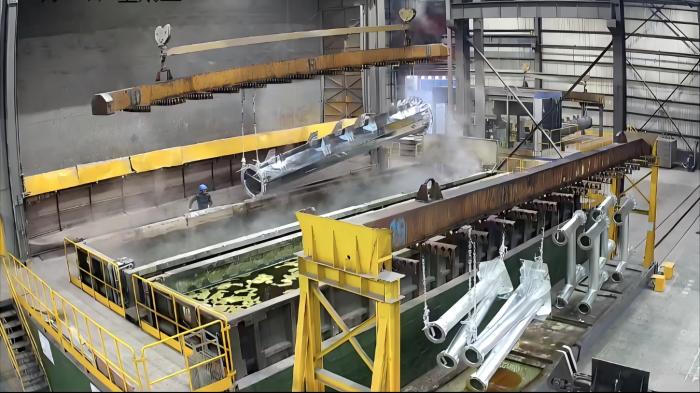
The primary and mandatory protection for all outdoor radar tower steel is hot-dip galvanizing. This process involves immersing the fabricated steel into molten zinc (around 450°C), creating a metallurgical bond of zinc-iron alloy layers.
· Standard: ASTM A123 (USA) or ISO 1461 (International).
· Thickness Requirements: According to ASTM A123 Table 1, for structural shapes (like angles and beams) with a thickness between 6.4 mm and 16.0 mm, the minimum average coating thickness is 100 μm (approximately 3.9 mils). Thinner secondary members require a minimum of 85 μm.
· Durability: A 100 μm zinc coating provides a maintenance-free lifespan of 30 to 50 years in moderate (C3) environments, thanks to the barrier and cathodic protection mechanisms of zinc.
Duplex Systems (HDG + Paint)
For radar towers located in coastal zones (salt-laden air) or industrial areas (sulfur dioxide pollution), standard galvanizing may corrode faster. In these highly corrosive (C4/C5) environments, engineers specify a duplex system.
· Process: After hot-dip galvanizing, a compatible primer (e.g., epoxy) and topcoat (e.g., polyurethane) are applied.
· Synergistic Effect: The paint seals the zinc, preventing it from being washed away, while the zinc prevents under-film corrosion if the paint is scratched. The service life of a duplex system is 1.5 to 2.5 times greater than the sum of the paint and zinc lives separately. A properly specified duplex system can exceed 25 years of service life even in a C5 coastal environment.
3. Structural Component Material Selection
Different parts of the radar tower require different material forms and sizes.
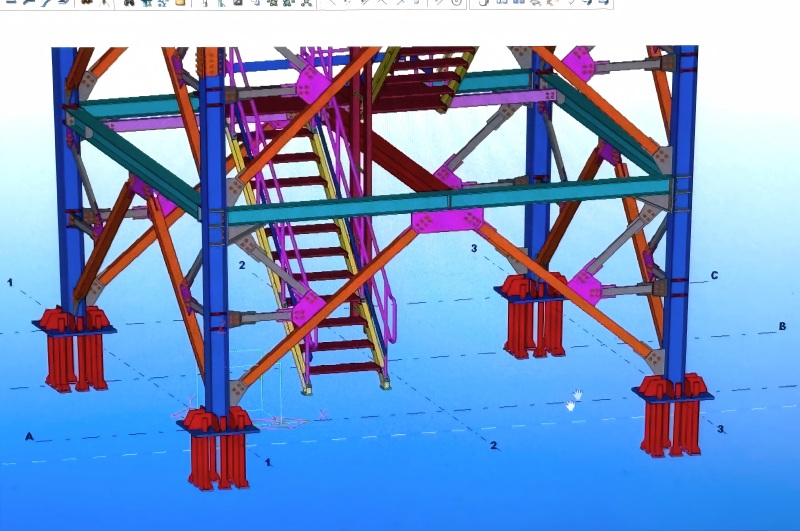
· Tower Legs & Bracing: Typically fabricated from hot-rolled equal angle steel or tubular steel (Q355B). The thickness is calculated based on wind and equipment loads.
· Antenna Mounting Platform: Constructed from heavy steel plates and beams. The interface flange (where the radar pedestal mounts) requires a thick, rigid plate (Q355B) to prevent deformation. This plate must be CNC-machined flat to ensure the radar is level.
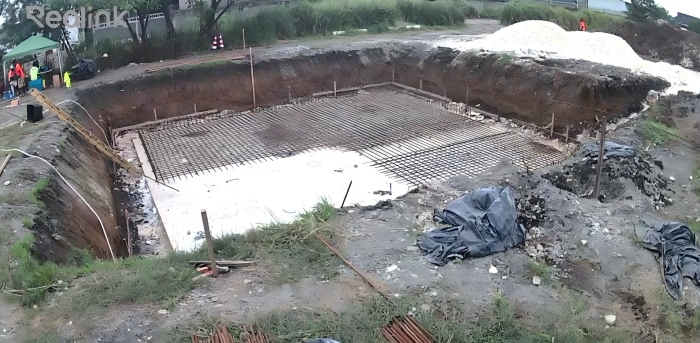
· Anchor Bolts (Foundation Interface): High-strength bolts (often Grade 8.8 or 10.9) are embedded in the concrete foundation to secure the tower legs. These must be heavily galvanized or provided with protective sleeves to prevent corrosion at the ground line.
Practical Engineering Example: Altai Tower's Material and Fabrication Control
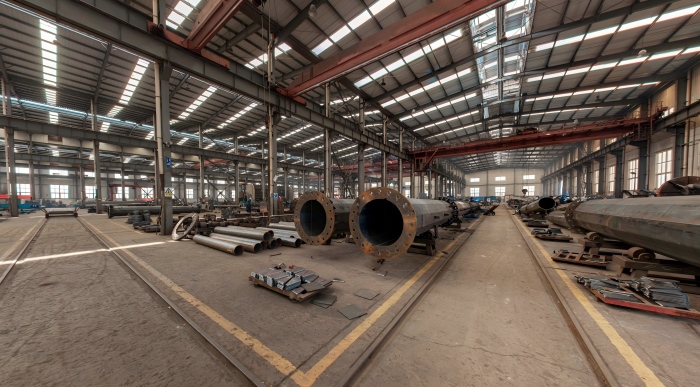
Selecting the right steel is only the first step. The material properties must be preserved through fabrication and protected during service. At Altai Tower Co., Ltd, our engineering and manufacturing processes are built around these material realities.
1. High-Strength Steel Fabrication
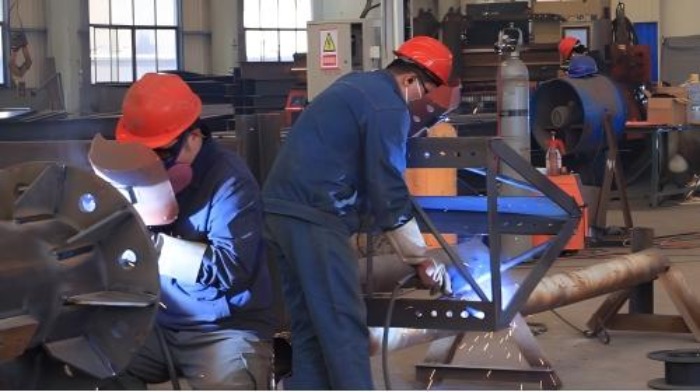
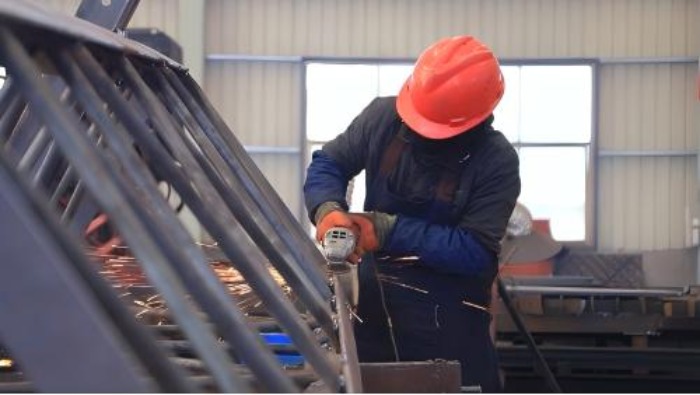
When working with Q355B structural steel, we enforce strict drilling and welding protocols. We utilize CNC drilling for all bolt holes in primary members, as punching thick, high-strength steel can introduce micro-cracks at the hole edges that compromise fatigue resistance. Our automated welding processes are qualified under AWS D1.1 to ensure the heat input is controlled, preventing the heat-affected zone (HAZ) from losing its toughness.
2. Advanced Galvanizing Control
Our in-house hot-dip galvanizing workshop strictly adheres to ASTM A123 standards. We conduct rigorous surface preparation (acid pickling and fluxing) to ensure the zinc bonds perfectly to the Q355B substrate. After galvanizing, our quality control team verifies the coating thickness using digital magnetic gauges, ensuring that it meets or exceeds the 85–100 μm requirement for structural reliability.
3. Customized Corrosion Protection
For clients building in coastal regions, Altai Tower provides both standard hot-dip galvanizing and duplex coating options. We apply high-quality epoxy primers and UV-resistant polyurethane topcoats in a controlled factory environment, ensuring the correct surface preparation (sweep blasting) is performed to guarantee maximum adhesion between the zinc and the paint.
F A Q s
Q1: Why is Q355B preferred over Q235B for radar tower legs?
A: Q355B has a higher yield strength (345–355 MPa) compared to Q235B (235 MPa). This allows the engineer to use thinner steel sections for the main load-bearing legs. A lighter tower reduces the overturning moment on the foundation and lowers the overall wind sail area, which is critical for radar stability and cost control.
Q2: What is the minimum zinc coating thickness required for radar tower legs?
A: According to ASTM A123, for structural steel shapes with a thickness greater than 6.4 mm (which is typical for radar tower legs), the minimum average coating thickness is 100 μm. For thinner secondary members, it is 85 μm.
Q3: What is a duplex coating and when should I specify it?
A: A duplex coating is a hot-dip galvanized base by a paint topcoat. You should specify it if the radar tower is located within a few kilometers of the coast (where salt spray is present) or in heavily polluted industrial areas. The paint provides an additional barrier, while the zinc provides backup protection. This system can extend the tower's maintenance-free life to over 25 years.
Q4: Can we use stainless steel for the entire radar tower to avoid corrosion?
A: Stainless steel is generally not used for the main structure of large radar towers due to its extremely high cost, lower stiffness-to-cost ratio, and complex fabrication (especially welding). High-strength carbon steel with a proper hot-dip galvanizing or duplex coating system is the most cost-effective and structurally reliable material for the application.
Q5: How does Altai Tower verify the material grade?
A: We require mill test certificates for every batch of steel. Our quality team verifies the chemical composition and mechanical properties against the Q355B/A572 Gr.50 standards. We also perform tensile and impact tests on samples to ensure the steel meets the required strength and toughness levels.
Conclusion
Selecting materials for an outdoor radar tower is a balancing act between structural strength, environmental resilience, and fabrication cost. Q355B / ASTM A572 Grade 50 provides the necessary stiffness for radar accuracy, while ASTM A123 hot-dip galvanizing (and duplex coatings for harsh sites) ensures the structure will not deteriorate over decades of exposure.
At Altai Tower, we combine deep material science knowledge with precision CNC fabrication and strict galvanizing controls. We ensure that the steel we source and process will perform flawlessly in the harshest outdoor environments.
Ready to discuss your radar tower project? Provide our engineering team with your site's environmental conditions and radar equipment loads. We will recommend the optimal steel grade and corrosion protection system for your specific project.


评论
发表评论