How Is a Radar Platform Designed?
Quick Answer
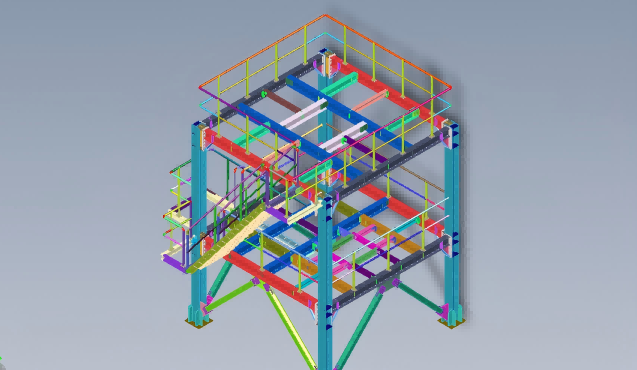
A radar platform is designed as a rigid structural diaphragm that serves three distinct functions: it safely transfers the massive concentrated loads of the radar pedestal and radome into the main tower legs, it provides a precise mounting interface for the equipment, and it creates a safe, functional workspace for maintenance personnel. Unlike a standard telecom platform—which simply holds lightweight antennas—a radar platform must be heavily braced to maintain structural stiffness, designed for high live loads (often 200 kg/m² or more), equipped with fall-arrest systems, and fabricated with CNC precision to ensure the radar’s bolt holes align perfectly without field modification.
Key Takeaways
· Structural Diaphragm: The platform is heavily cross-braced and integrated into the tower legs to act as a rigid horizontal diaphragm, preventing localized flexing and contributing to the tower's overall natural frequency.
· Precision Interface: The mounting surface must be perfectly level and accurately drilled (often via CNC) to match the radar pedestal's exact bolt pattern, avoiding structural eccentricities.
· Safety First: Maintenance spaces are designed with permanent guardrails, anti-slip flooring (usually steel grating), and continuous vertical fall-arrest systems.
· Load Bearing: Platforms are engineered for the extreme dead weight of the radome/antenna (up to 15,000 kg combined) and a live load of 200 kg/m² for personnel and tools.
· Cable & Power Integration: Dedicated routing for RF cables and power lines is integrated into the platform and tower structure to prevent signal interference and physical hazards.
1. User Search Intent Analysis
Who is searching for this information?
| User Type | Primary Intent | Key Concerns |
|---|---|---|
| Radar System Installers | Understand how the tower platform accommodates the radar pedestal | Bolt alignment, leveling, cable routing |
| Structural Engineers | Learn how platform rigidity affects overall tower dynamics | Load distribution, diaphragm action, stiffness |
| Procurement / Project Managers | Compare platform design proposals from tower vendors | Steel weight, fabrication complexity, safety features |
| Health & Safety Officers | Verify maintenance access and fall protection compliance | Guardrails, grating, ladder access, fall-arrest anchors |
Search intent summary: Users want to understand the engineering and practical details of a radar platform. They need to know how the platform physically supports the radar, how the installation process works, and how it protects the maintenance crew.
2. Key Questions Users May Have
1. Why does a radar platform need to be more heavily braced than a telecom platform?
2. How do you ensure the radar pedestal bolts align perfectly on site?
3. What is the standard live load for a radar maintenance platform?
4. What type of flooring is used—solid plate or grating?
5. How does the platform handle the routing of heavy RF cables?
6. What safety features are mandatory for personnel working at the top?
7. Does the platform design affect the radar's signal?
3. Article Framework
Section 1: The Dual Role of the Radar Platform
Why the platform is both a structural component and an equipment interface.
Section 2: Equipment Installation & Precision
Mounting interfaces, CNC drilling, and leveling.
Section 3: Maintenance Space & Personnel Operations
Live loads, guardrails, fall-arrest systems, and safe routing.
Section 4: Structural Design Principles
Diaphragm action, steel grating vs. solid plate, and stiffness.
Section 5: Comparison: Radar Platform vs. Telecom Platform
A concise look at the design differences.
Section 6: Case Study — Altai Tower Platform Engineering
How Altai Tower integrates precision and safety.
Section 7: FAQ
Common questions and answers.
4. Core Content
4.1 The Dual Role of the Radar Platform
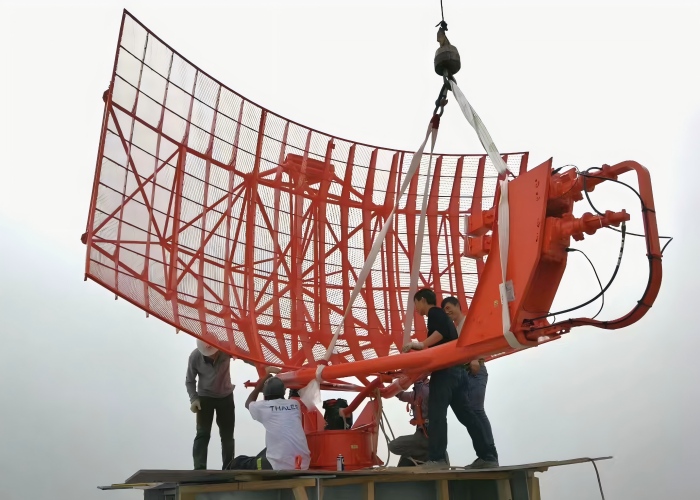
At the top of a radar tower, the platform is far more than just a "floor." It is a critical structural node that serves two distinct roles:
· The Equipment Interface: It must flawlessly connect the heavy, rotating radar pedestal to the tower.
· The Maintenance Workspace: It must provide a safe, secure environment for technicians to perform calibration, repair, and routine maintenance.
Because of these dual roles, the platform must be engineered with a strict focus on stiffness (to prevent vibration) and precision (to ensure perfect alignment).
4.2 Equipment Installation & Precision
The radar pedestal is a massive, precision-engineered piece of machinery. It does not flex or bend to accommodate a poorly built platform.
· Mounting Interface: The platform features a custom-drilled top plate or machined flange. The hole pattern must perfectly match the pedestal's base. Using CNC punching and drilling, manufacturers like Altai Tower guarantee hole alignment tolerances within ±0.5 mm.
· Leveling: The platform must be perfectly level before the radar is installed. Manufacturers often provide adjustable jacking points or shim plates to ensure that any minor tower erection tolerances are corrected before the radar is bolted down.
· Cable Routing: The platform includes designated "cable drop" holes and conduits. RF cables (which are thick and heavy) and power cables must be routed cleanly away from the platform walkways and secured to avoid damage from wind or foot traffic.
4.3 Maintenance Space & Personnel Operations
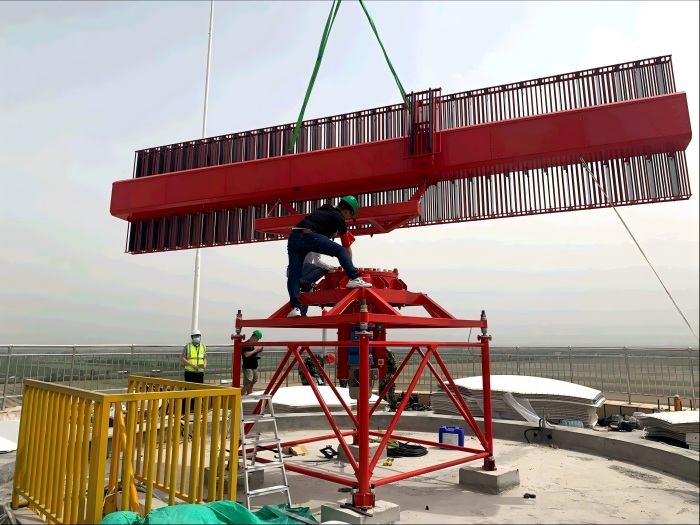
Working at 30 to 50 meters above ground with heavy winds requires strict safety and spatial considerations.
· Live Load Design: The platform is designed for a live load of 200 kg/m² (or higher), ensuring it can safely hold multiple technicians and their tools.
· Clearance and Space: There must be sufficient clearance around the radar pedestal to allow for safe movement. Platforms are sized to allow technicians to comfortably walk and kneel without tripping over equipment.
· Guardrails and Fall Arrest: Standard safety requirements (such as OSHA and local regulations) mandate guardrails of at least 1.1 meters (42 inches) in height. Additionally, a continuous vertical fall-arrest cable system (such as a Latchways system) is installed along the access ladder and extended over the platform to allow technicians to secure their harnesses.
· Flooring: Platforms are almost always constructed from open steel grating rather than solid plates. Grating is preferred because it reduces wind loading, allows light to pass through, sheds ice and snow more easily, and provides grip underfoot.
4.4 Structural Design Principles: The Stiffened Diaphragm
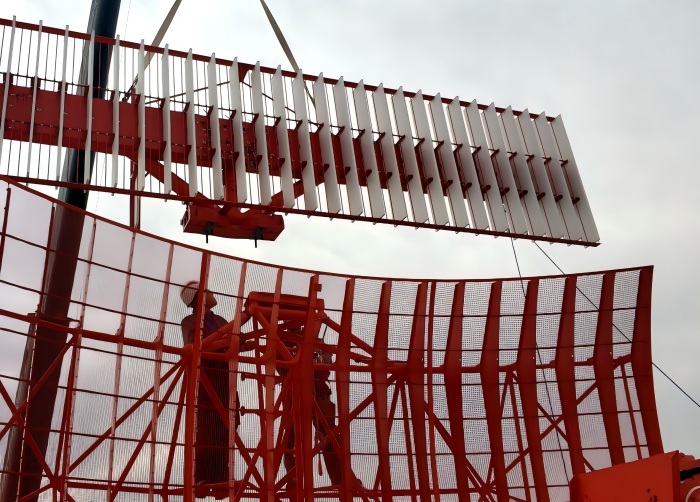
From an engineering perspective, the platform acts as a stiffened diaphragm.
· Diaphragm Action: The platform is heavily cross-braced (using diagonal steel members under the deck) and firmly bolted to all tower faces. This creates a rigid horizontal ring that distributes the eccentric loads of the radar antenna across the tower legs and prevents the tower from twisting (torsional deflection).
· Torsional Rigidity: If a platform is designed too lightly, it can introduce "local flexibility," which lowers the tower's natural frequency. A rigid diaphragm ensures the tower meets its required natural frequency (often ≥ 1 Hz to 3 Hz) to avoid resonant vibration.
5. Comparison: Radar Platform vs. Telecom Platform
| Parameter | Radar Platform | Standard Telecom Platform |
|---|---|---|
| Structural Role | Rigid diaphragm; critical for natural frequency | Simple mounting ring; does not affect stiffness |
| Load Focus | Concentrated heavy loads (up to 15 tonnes) + dynamic rotation | Distributed lightweight antennas (1-3 tonnes) |
| Flooring | Heavy-duty steel grating | Steel grating or simple walkways |
| Precision | CNC-drilled for exact pedestal flange alignment | Punched holes for standard antenna brackets |
| Safety | Full fall-arrest systems, perimeter guardrails | Basic climbing fall-arrest |
6. Case Study — Altai Tower Platform Engineering
Qingdao Altai Tower Co., Ltd. (Altai Tower) specializes in designing radar support structures that seamlessly integrate with the delicate requirements of radar equipment. Their approach to platform design emphasizes precision, safety, and structural stiffness.
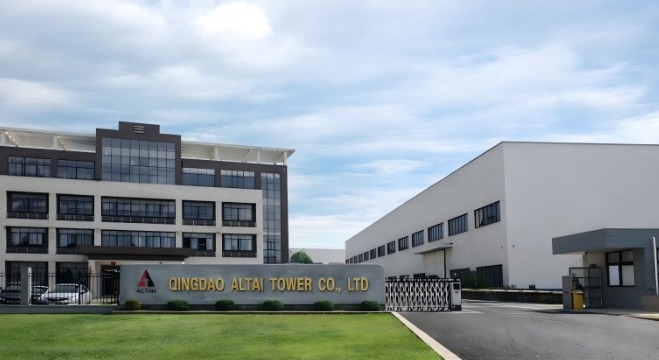
Engineering Features of Altai Radar Platforms:
· Rigid Diaphragm Construction: Altai Tower's radar platforms are heavily braced to ensure that the massive dynamic loads from the radar pedestal are transferred safely down the legs, preventing torsional flexing.
· CNC Fabrication: All platform connection plates and radar mounting flanges are cut and drilled using CNC machinery. This guarantees that the holes for the radar pedestal align perfectly on site, eliminating costly field modification.
· Custom Safety Integration: Altai designs platforms with dedicated mounting points for vertical safety cables. The walkways are sized to allow technicians to safely access all sides of the radar pedestal without reaching over guardrails.
· Open Grating Design: Platforms use open steel grating to minimize the wind load on the tower, reduce ice accumulation, and ensure the tower's dynamic stiffness is maintained.
Application Example:
For a 30-meter pest migration monitoring radar tower, Altai Tower manufactured a multi-level platform. The lower level housed the power and communication cabinets, while the upper platform was precision-machined to directly interface with the radar's pedestal flange. The entire structure was hot-dip galvanized to ASTM A123 to ensure the safety systems (guardrails, grating) remained rust-free for decades.
7. F A Q s
Q1: Why does a radar platform need to be more heavily braced than a telecom platform?
A: A radar platform must act as a rigid structural diaphragm. If it is too flexible, the torque from the rotating radar pedestal can cause the tower to twist or vibrate. Heavy cross-bracing prevents this, ensuring the radar maintains its pointing accuracy.
Q2: How do you ensure the radar pedestal bolts align perfectly on site?
A: Reputable manufacturers use CNC (Computer Numerical Control) drilling to punch the holes in the mounting flange. This ensures sub-millimeter accuracy. Additionally, some designs use match-drilling or slotted washers to accommodate minor erection tolerances.
Q3: What is the standard live load for a radar maintenance platform?
A: Standard design live loads for maintenance platforms are typically a minimum of 200 kg/m² (approximately 40 lbs/ft²) to safely support technicians, their tools, and any replacement parts they bring up the tower.
Q4: What type of flooring is used—solid plate or grating?
A: Open steel grating is the industry standard. It sheds wind load, allows water to drain, prevents ice and snow buildup, and provides better grip for boots than a solid steel plate.
Q5: How does the platform handle the routing of heavy RF cables?
A: Platforms are designed with specific cable drop-outs and routing trays. Heavy waveguides and RF cables are secured to the tower legs and routed through the platform safely, keeping them off the walkway to prevent tripping hazards.
Q6: What safety features are mandatory for personnel working at the top?
A: Mandatory safety features include perimeter guardrails (minimum 1.1 meters high with mid-rails), anti-slip toe boards, and a continuous fall-arrest system (usually a galvanized steel cable) extending from the ladder over the platform so workers can secure their harnesses.
Conclusion
Designing a radar platform is a delicate balance of structural rigidity, equipment precision, and human safety. By engineering the platform as a stiffened diaphragm, utilizing CNC fabrication for perfect mounting interfaces, and integrating robust fall-arrest systems, manufacturers ensure that the radar operates with maximum precision while the technicians maintaining it remain entirely safe.
Ready to design a radar platform that perfectly matches your equipment and safety standards? Contact Altai Tower's engineering team today for a custom platform design and detailed proposal.


评论
发表评论