How Can Vibration Affect a Radar Support Tower?
Quick Answer
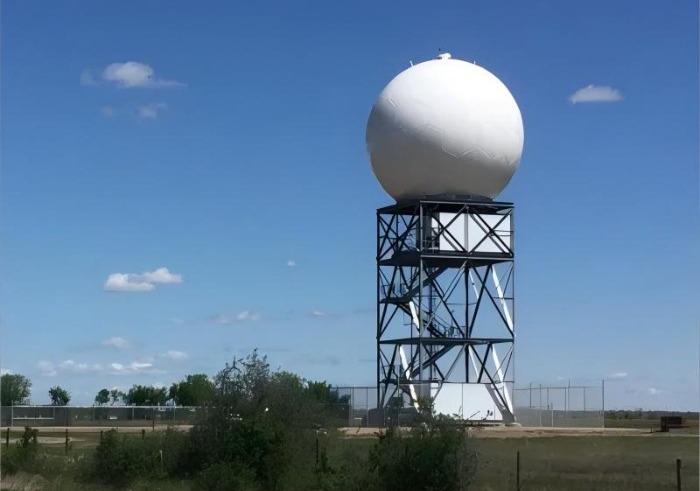
Vibration is the silent enemy of radar precision. For a radar support tower, structural vibration—whether caused by wind, the rotating antenna, or mechanical resonance—introduces pointing errors, phase distortions, and beam misalignment. Because radar relies on precisely timed electromagnetic waves, even minute structural oscillations can blur target images, reduce tracking accuracy, and render data unreliable. To combat this, radar towers are engineered with exceptional structural stiffness to maintain a high natural frequency, keeping the tower's vibration modes well separated from the operational frequencies of the radar equipment and environmental wind loads.
Key Takeaways
· Vibration degrades data, not just structure: Unlike telecom towers where movement only affects coverage, radar tower vibration causes phase errors and pointing inaccuracies that corrupt the radar data itself.
· Resonance is the ultimate threat: If the tower's natural frequency matches the rotating antenna or wind vortex shedding frequency, the structure can amplify vibrations uncontrollably.
· Stiffness is the primary defense: Increasing structural stiffness (k) raises the natural frequency, moving it away from forcing frequencies and preventing resonance.
· Wind and rotation are the primary sources: The rotating radar pedestal creates cyclic loads (typically 0.1–0.5 Hz), while wind passing the tower and radome creates vortex-induced vibration (VIV).
· Access systems matter: Ladders, platforms, and cable trays must be integrated into the structural design; otherwise, they can introduce local flexibility that lowers the tower's natural frequency.
1. User Search Intent Analysis
Who is searching for this information?
| User Type | Primary Intent | Key Concerns |
|---|---|---|
| Radar Engineers | Understand how structural vibration impacts radar performance | Phase errors, beam distortion, natural frequency requirements |
| Structural Engineers | Learn how to design towers to minimize vibration | Stiffness optimization, damping, dynamic analysis |
| Procurement / Project Managers | Evaluate why radar towers cost more than standard towers | Cost of stiffness, specialized engineering requirements |
| Maintenance Planners | Identify signs of structural vibration issues | Fatigue cracks, loosening bolts, antenna misalignment |
Search intent summary: Users are looking for a clear explanation of the physics of vibration in radar towers and the engineering solutions required to control it. They want to understand the direct link between structural stiffness, vibration, and the accuracy of the radar system.
2. Key Questions Users May Have
1. How does vibration specifically affect radar performance?
2. What is the difference between structural resonance and normal wind sway?
3. What is natural frequency, and why is it critical for radar towers?
4. How does the rotating radar antenna cause the tower to vibrate?
5. Can vibration lead to structural failure?
6. What design techniques are used to increase stiffness and reduce vibration?
7. How are dampers used in radar towers?
8. How does vibration affect radar equipment maintenance and lifespan?
3. Article Framework
Section 1: The Physics of Vibration in Radar Towers
Defining natural frequency, forcing frequency, and resonance.
Section 2: How Vibration Degrades Radar Performance
Pointing errors, phase coherence loss, and image smearing.
Section 3: The Sources of Vibration
Rotating antenna loads, wind (vortex shedding), and mechanical vibration.
Section 4: The Stiffness-Vibration Relationship
Why maximizing stiffness is the primary solution.
Section 5: Engineering Solutions for Vibration Control
Structural optimization, damping systems, and access system integration.
Section 6: Case Study — Altai Tower Vibration Mitigation Approach
Real-world engineering parameters and manufacturing capabilities.
Section 7: FAQ
Common questions and answers.
4. Core Content
4.1 The Physics of Vibration in Radar Towers
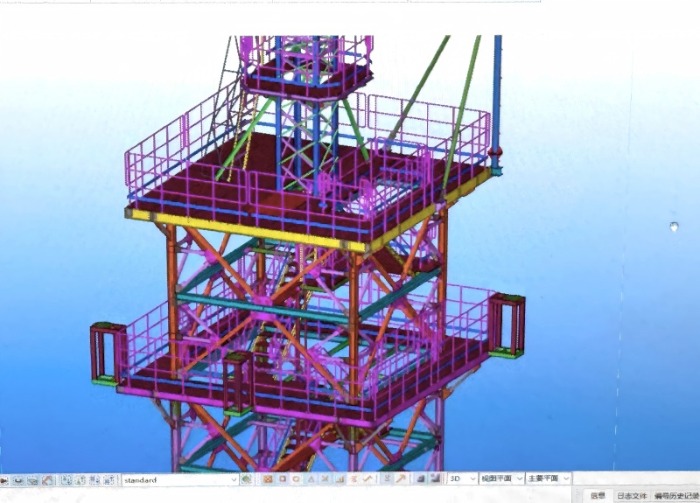
To understand how vibration affects a radar tower, we must first look at the fundamental physics of structural dynamics. Every structure has a natural frequency—the rate at which it naturally vibrates when disturbed, much like a tuning fork.
The natural frequency (fn) of a structure is determined by its stiffness (k) and its mass (m):
To increase the natural frequency (and thereby increase stability), engineers must either increase stiffness or decrease mass. For radar towers, which must carry heavy equipment, increasing structural stiffness is the primary strategy.
Resonance occurs when an external force (the forcing frequency) matches the structure's natural frequency. When this happens, the structure absorbs energy with each cycle, causing vibrations to amplify dramatically. In a radar tower, this can lead to violent swaying and rapid structural fatigue.
4.2 How Vibration Degrades Radar Performance
Radar systems function by emitting precisely timed radio waves and analyzing the returning echoes. The antenna must have an exact, known pointing direction to accurately locate targets.
· Pointing Errors: If the tower sways in the wind, the antenna points somewhere other than where the radar system thinks it is pointing. A deflection of just 0.075 degrees can translate to a significant positional error over a distance of 100 kilometers.
· Phase Distortions: Vibration causes the antenna to move between the time a signal is transmitted and when the echo is received. This movement introduces Doppler shift errors and phase incoherence, smearing the radar image and reducing resolution.
· Beam Misalignment: In phased-array or multi-antenna systems, relative movement between antenna elements can distort the beam-forming pattern, creating blind spots or false targets.
4.3 The Sources of Vibration
What actually makes a radar tower vibrate? There are three primary sources:
· Rotating Antenna Loads: The radar pedestal rotates continuously (often at 4–6 RPM). Any slight imbalance in the heavy antenna and pedestal creates a cyclic, centrifugal force that transfers directly into the tower structure.
· Wind and Vortex Shedding: As wind flows past the tower and the large radome, it creates alternating vortices (vortex shedding). If the frequency of these vortices matches the tower's natural frequency, it induces Vortex-Induced Vibration (VIV), causing the tower to sway laterally.
· Mechanical Equipment: Motors, compressors, and HVAC systems within the equipment shelter or pedestal can transmit high-frequency vibrations through the steel structure.
4.4 The Stiffness-Vibration Relationship
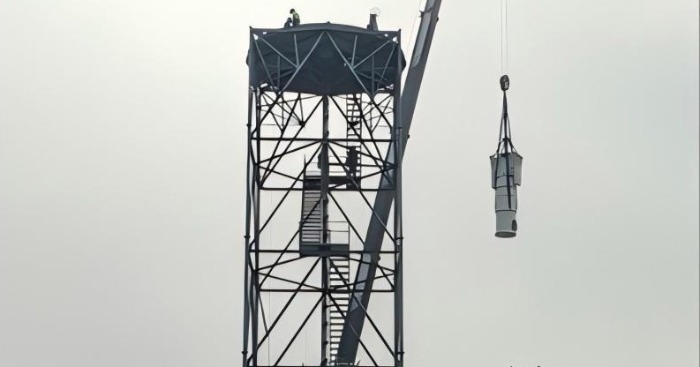
The relationship between stiffness and vibration is the cornerstone of radar tower design. A stiff structure resists deformation, meaning its natural frequency is high. By ensuring the natural frequency is significantly higher than the forcing frequencies (rotation and wind), the tower avoids resonance.
For example, if a radar antenna rotates at 0.1 Hz, the tower must be designed with a natural frequency significantly higher (e.g., ≥ 1.0 Hz) to ensure a safe separation margin. Achieving this requires robust structural design, including wider base dimensions, heavier primary leg sections, and dense bracing patterns.
4.5 Engineering Solutions for Vibration Control
To ensure stability and precision, radar towers employ several engineering solutions:
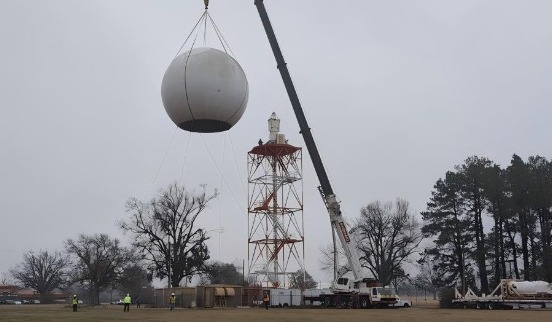
· Structural Form Optimization: Using a four-legged lattice configuration with a wide base provides exceptional torsional rigidity and stiffness. Taper ratios are optimized to distribute mass and stiffness efficiently.
· Stiffened Platforms: Platforms are designed as rigid diaphragms (using heavy cross-bracing) to transfer the massive dynamic loads from the radar pedestal directly into the main tower legs without local flexing.
· Tuned Mass Dampers (TMDs): For tall towers or critical applications, a TMD can be installed near the top. This is a massive weight suspended on springs that oscillates out of phase with the tower, absorbing energy and dissipating it as heat, effectively damping vibrations.
· Access Integration: Ladders, safety cables, and platforms are integrated into the primary structural nodes. Attaching heavy access systems to secondary members can create localized flexibility that alters the tower's dynamic response.
5. Case Study — Altai Tower Vibration Mitigation Approach
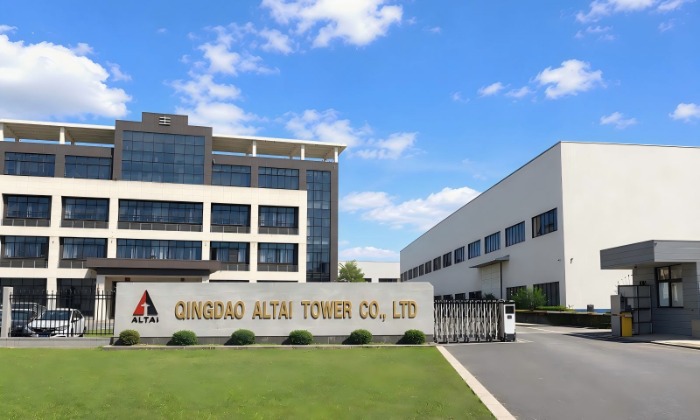
Qingdao Altai Tower Co., Ltd. is a professional manufacturer of telecommunication towers, power towers, and specialized radar support structures, established in 2003. The company’s engineering team designs radar towers with a strong focus on dynamic stiffness and vibration control.
Engineering and Manufacturing Capabilities:
· Dynamic Analysis: Altai Tower uses advanced FEA (Finite Element Analysis) to model the tower's natural frequencies, ensuring a safe separation margin from the radar's rotational frequency.
· Fabrication Precision: CNC punching and drilling ensure ±0.5mm tolerance on bolt holes. This precision eliminates "slop" or play in the bolted connections, which can reduce structural stiffness and introduce nonlinear vibrations.
· Platform Rigidity: Altai Tower designs radar platforms as fully braced stiffened diaphragms, preventing local deflection under the heavy cyclic loads of the radar pedestal.
Application Example: 30-Meter Radar Support Tower
Altai Tower recently manufactured a 30-meter radar support tower for pest migration monitoring. The design addressed the specialized vibration requirements of the radar system:
· High-Stiffness Lattice Configuration: The lattice geometry was optimized to achieve a natural frequency well above the operational forcing frequencies, ensuring precise pointing accuracy.
· Diaphragm Platforms: The radar mounting platform was heavily cross-braced and integrated into the main leg structure to handle the concentrated weight and torque of the radar pedestal.
· Integrated Safety Access: A vertical fall-arrest cable system was installed along the ladder to ensure safe maintenance access without compromising the structural stiffness.
6. F A Q s
Q1: How does vibration specifically affect radar performance?
A: Vibration causes the radar antenna to move while transmitting and receiving. This introduces pointing errors (the radar looks at the wrong spot) and phase errors (the timing of the radar wave is distorted), which blur the radar image, reduce target resolution, and can cause the system to lose track of fast-moving objects.
Q2: What is the difference between structural resonance and normal wind sway?
A: Normal wind sway is a slow, steady deflection caused by constant wind pressure. Resonance is a dynamic amplification of movement that occurs when the frequency of wind gusts or antenna rotation matches the tower's natural frequency. Resonance causes violent, sustained oscillation that can quickly damage the structure and destroy radar data.
Q3: What is natural frequency, and why is it critical for radar towers?
A: Natural frequency is the rate at which a structure naturally vibrates when disturbed. It is critical for radar towers because if the natural frequency coincides with the rotating antenna's frequency or wind vortex shedding, resonance occurs. The tower must be designed with a natural frequency high enough to avoid this.
Q4: How does the rotating radar antenna cause the tower to vibrate?
A: The rotating radar pedestal and antenna have a massive weight (up to 10,000 kg). Even a slight imbalance in this rotating mass creates a centrifugal force that pushes laterally against the tower. This cyclic force transfers directly into the steel structure, acting as a continuous vibration source.
Q5: Can vibration lead to structural failure?
A: Yes. Prolonged vibration, especially resonance, causes rapid fatigue in steel members and bolted connections. Over time, this can lead to the formation of cracks in the steel or the loosening of bolts, which can ultimately result in catastrophic structural failure if not addressed.
Q6: What design techniques are used to increase stiffness and reduce vibration?
A: Engineers use wider tower bases, heavier primary leg sections, denser diagonal bracing, and rigid diaphragms for platforms. They also ensure that access systems (ladders, cables) are structurally integrated and perform dynamic analysis to verify natural frequencies.
Q7: How are dampers used in radar towers?
A: Tuned Mass Dampers (TMDs) are massive weights suspended near the top of the tower on springs and dashpots. When the tower sways, the TMD oscillates out of phase, absorbing the kinetic energy and dissipating it as heat, thereby reducing the amplitude of vibration.
Q8: How does Altai Tower ensure radar pointing accuracy?
A: Altai Tower performs rigorous dynamic analysis during the design phase to ensure the tower's natural frequency exceeds the radar's operational frequencies. Platforms are designed as rigid diaphragms, and CNC fabrication guarantees that the tower assembles with exact precision, preventing structural eccentricities that could lead to pointing errors.
Conclusion
Vibration is the invisible force that dictates radar tower design. For a radar support tower, the ultimate goal is not just to stand strong against the wind, but to remain perfectly still. The relationship between structural stiffness, natural frequency, and vibration control is the fundamental engineering challenge in building these precision structures. By understanding these dynamics and applying advanced structural and damping technologies, manufacturers like Altai Tower ensure that radar systems can operate with the clarity and accuracy required to secure our skies and monitor our environment.
Ready to deploy a radar tower that meets strict structural and dynamic requirements? Contact Altai Tower’s engineering team today for custom design, dynamic analysis, and a detailed proposal.


评论
发表评论