Variable Bracing Density: Optimizing Angle Steel Tower Stiffness Without Adding Weight
Quick Answer
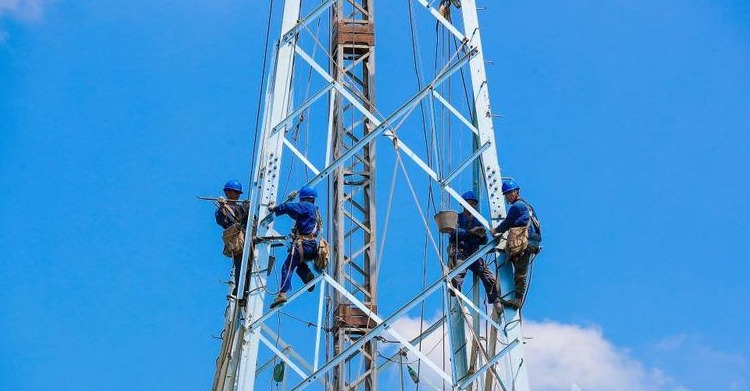
Variable bracing density is a design strategy that tailors the spacing and configuration of diagonal bracing members along the height of an angle steel tower to match the actual structural demand at each elevation. The principle is straightforward: concentrate bracing where forces are highest (the bottom) and reduce it where demand is lower (the top). By matching bracing density to the internal force distribution—which follows the bending moment diagram of a cantilever beam—engineers can achieve the required stiffness and stability without the weight penalty of uniform bracing. This approach can reduce steel consumption by 10–25% compared to conventional designs with uniform bracing density, while maintaining or even improving structural performance. Research has demonstrated that optimized bracing systems can significantly reduce the amount of steel material used while improving the weight-to-stiffness ratio of lattice towers.
Key Takeaways
Forces decrease with height: The bending moment in a cantilever tower is highest at the base and approaches zero at the top—bracing demand follows the same pattern
Variable density matches demand: Dense bracing at the bottom provides strength and stability where needed; sparser bracing at the top saves weight without compromising performance
Multiple bracing patterns can be combined: A single tower may use different bracing types at different elevations—for example, double-K at the base, K-bracing in the middle, and X-bracing at the top
Material savings are substantial: Optimized bracing layouts can reduce tower weight by 10–25% compared to uniform-density designs
Stiffness-to-weight ratio improves: Topology optimization studies have consistently demonstrated that highly optimized bracing systems produce an improved weight-to-stiffness ratio
Bracing type selection matters: Studies comparing different bracing systems have identified K-bracing as particularly optimal for self-supporting lattice towers
1. The Fundamental Principle: Matching Bracing to Demand
The Cantilever Analogy
A self-supporting lattice tower behaves fundamentally like a cantilever beam fixed at the base. The bending moment from wind and equipment loads is maximum at the foundation and reduces to zero at the top. This is the key insight that makes variable bracing density both logical and effective.
In a uniform-density design, the same bracing spacing and pattern are applied from base to top. This means the upper portions of the tower are over-designed—they contain more bracing than necessary to resist the forces they actually experience. Variable density design corrects this inefficiency by scaling bracing concentration to match the actual force distribution.
Bracing Functions in Lattice Towers
Diagonal bracing members serve two primary functions in a lattice tower:
1. Stability: Bracing reduces the effective unbraced length of primary compression members (legs), preventing buckling under compressive loads
2. Load transfer: Bracing distributes lateral forces (wind, seismic) from the tower faces into the legs and down to the foundation
The required bracing density is directly proportional to the magnitude of these forces. At the base, where forces are highest, bracing must be dense and robust. Near the top, where forces diminish, sparser bracing can provide adequate stability.
2. The Technical Implementation
Section-by-Section Optimization
A practical approach to variable bracing density divides the tower into vertical sections (typically 5–10 meters each) and assigns a bracing configuration to each section based on the calculated internal forces. A 45-meter tower case study illustrates this approach:
| Section (from top) | Height Range | Bracing Type | Rationale |
|---|---|---|---|
| Top 3 sections | 30–45m | X-bracing | Lightest bracing; lower forces at top |
| Middle 4 sections | 10–30m | Double K-bracing | Moderate density for intermediate forces |
| Bottom 2 sections | 0–10m | Double K1-bracing | Highest density; maximum forces at base |
This graduated approach ensures that each section of the tower is braced appropriately for the forces it actually experiences.
Bracing Type Selection
Different bracing patterns offer different trade-offs between stiffness, weight, and constructability. Research on various bracing systems—including K, KD, Y, YD, D, XB, and X types—has identified that K-bracing tends to be the most optimal design among common configurations.
| Bracing Type | Characteristics | Best Application |
|---|---|---|
| X-bracing (cross-bracing) | Simple, effective in tension and compression; moderate material usage | Upper sections where forces are lower |
| K-bracing | Provides good stiffness with efficient member sizing; widely adopted as optimal | Middle sections |
| Double K-bracing | Increased redundancy and stiffness; higher material usage | Lower sections with high forces |
| W-bracing | Cost-effective and competent option | Where economy is prioritized |
Member Sizing Adjustments
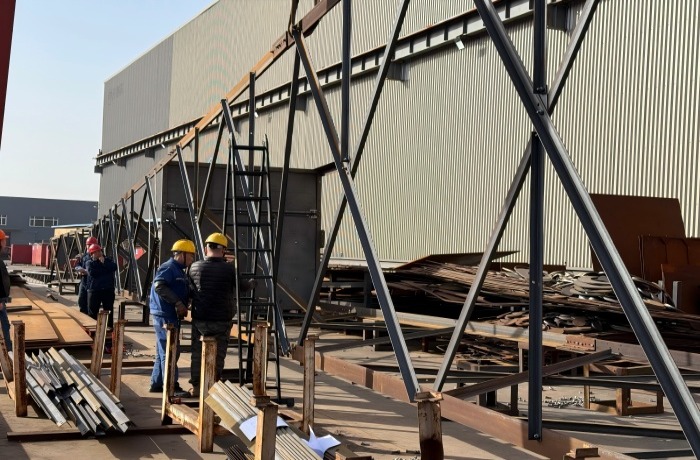
Variable bracing density is not just about spacing—it also involves adjusting member sizes. In the bottom sections, where forces are highest, bracing members may use larger angle sections (e.g., 200×200×20). As forces decrease with height, smaller sections (e.g., 150×150×12) can be used in upper sections. This graduated member sizing complements the variable density approach, further optimizing material usage.
3. The Structural Benefits
Stiffness Without Weight Penalty
The primary advantage of variable bracing density is achieving the required structural stiffness with less material. Research on leg spacing optimization has demonstrated that providing a larger distance between the legs while optimizing structural members results in both higher bending stiffness and lower structure self-weight.
Topology optimization studies have further confirmed that highly optimized bracing systems reduce the amount of steel material used while improving the weight-to-stiffness ratio of lattice towers.
Buckling Prevention
The most critical function of bracing—particularly in the lower sections of a tall tower—is preventing buckling of the main legs. By concentrating bracing where compression forces are highest, variable density design ensures that the effective unbraced length of the legs is minimized at the base, where it matters most. This targeted approach provides superior buckling resistance compared to uniform-density designs that may over-brace the top while under-bracing critical lower sections.
Weight Savings
The material savings from variable bracing density are substantial. Studies on transmission tower optimization have found weight reductions of 14–24% through optimized design. For a typical 45-meter telecom tower, this can translate to several tons of steel saved per tower—a significant reduction in both material cost and carbon footprint.
4. Design Standards and Methodologies
Analytical Framework
Implementing variable bracing density requires a rigorous analytical approach:
· Load determination: Calculate wind, ice, and equipment loads per applicable standards (TIA-222, ASCE 7, or local codes)
· Force distribution analysis: Determine internal forces (axial, shear, moment) at each section of the tower
· Section-by-section bracing design: Specify bracing type, spacing, and member sizes for each section based on calculated forces
· Stability verification: Check that effective unbraced lengths and buckling capacities meet design requirements
· Deflection and dynamic analysis: Verify that the optimized tower meets serviceability and natural frequency requirements
Optimization Tools
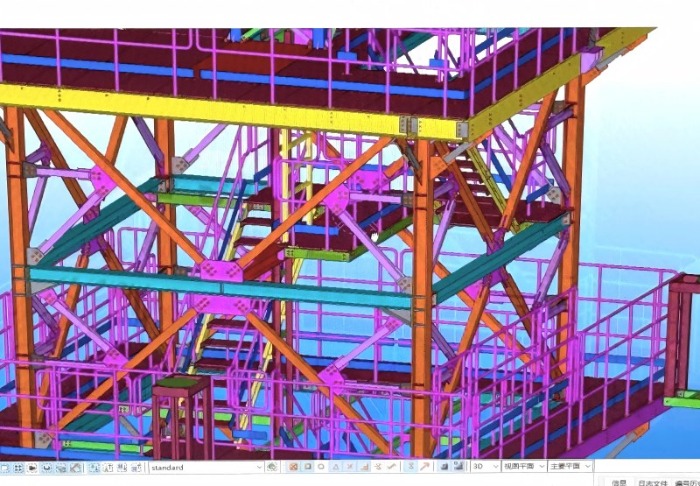
Modern structural analysis software enables sophisticated optimization of bracing layouts. Finite element analysis (FEA) can model the entire tower and identify the optimal bracing configuration for each section. Topology optimization techniques have been successfully applied to lattice telecommunication towers, producing highly optimized bracing systems with improved weight-to-stiffness ratios.
5. Application: Qingdao Altai Tower Approach
Qingdao Altai Tower Co., Ltd. is a professional manufacturer of telecommunication towers, power towers, and tower accessories, established in 2003. The company specializes in the design, manufacturing, and installation of steel towers, with products exported to more than 100 countries and regions.
Engineering Capabilities
Qingdao Altai Tower applies variable bracing density principles in its lattice tower designs through:
· Section-by-section optimization: Each tower is divided into sections with bracing configurations tailored to the calculated force distribution
· Multiple bracing type integration: Combining X-bracing, K-bracing, and double-K bracing at different elevations to optimize stiffness-to-weight ratio
· Pre-engineered design library: Extensive library of pre-certified designs for various height requirements (typically 15–80 meters) and load capacities
· CNC precision fabrication: 4000-ton hydraulic CNC bending machine enables precise fabrication of complex bracing configurations
· In-house galvanizing: Hot-dip galvanizing per ASTM A123 ensures corrosion protection for all bracing members
Manufacturing Standards
| Capability | Specification |
|---|---|
| Production capacity | 3,000 metric tons per month |
| Galvanizing | In-house workshop with Italian equipment, strictly following ASTM A123 |
| Lead time | 30 days after payment |
| Certifications | ISO 9001, ISO 14001, ISO 45001, CE |
| Design standards | ANSI/TIA-222-H, GB/T 2694, AWS D1.1 |
Quality Control
Qingdao Altai Tower integrates quality verification throughout the manufacturing process, including trial assembly of completed tower sections to verify dimensional accuracy and bracing fit-up before galvanizing and shipment.
6. Comparison: Variable vs. Uniform Bracing Density
| Parameter | Uniform Bracing Density | Variable Bracing Density |
|---|---|---|
| Bracing spacing | Constant from base to top | Dense at bottom; sparse at top |
| Member sizing | Same size throughout | Larger at bottom; smaller at top |
| Material usage | Higher (over-designed upper sections) | Lower (10–25% savings) |
| Stiffness distribution | Uniform but inefficient | Matched to demand |
| Buckling resistance | Over-designed at top; potentially under-designed at critical base sections | Concentrated where needed most |
| Construction complexity | Simpler (repetitive details) | More complex (multiple patterns) |
| Cost | Higher material cost | Lower material cost; slightly higher engineering cost |
| Carbon footprint | Higher | Lower |
F A Q s
Q1: What is variable bracing density in tower design?
- A: Variable bracing density is a design strategy that adjusts the spacing and configuration of diagonal bracing members along the tower height to match the actual structural demand. Bracing is concentrated at the bottom where forces are highest and reduced at the top where demand is lower.
Q2: Why does bracing density need to vary with height?
- A: A self-supporting tower behaves like a cantilever beam—the bending moment is maximum at the base and decreases to zero at the top. Uniform bracing density over-designs the upper sections, wasting material. Variable density matches bracing to the actual force distribution.
Q3: What are the most common bracing types used in lattice towers?
- A: Common bracing types include X-bracing (cross-bracing), K-bracing, double K-bracing, W-bracing, Y-bracing, and KD-bracing. Studies have identified K-bracing as particularly optimal for self-supporting lattice towers.
Q4: How much material can variable bracing density save?
- A: Optimized bracing layouts can reduce tower weight by 10–25% compared to uniform-density designs. For a typical 45-meter telecom tower, this translates to several tons of steel saved.
Q5: Does variable bracing density compromise structural safety?
- A: No. When properly engineered, variable bracing density maintains or improves structural performance by concentrating material where it is most needed. The design must verify that stability, deflection, and strength requirements are met at all sections.
Q6: Can different bracing types be combined in one tower?
- A: Yes. A typical approach uses different bracing types at different elevations—for example, double-K at the base for maximum stiffness, K-bracing in the middle sections, and X-bracing at the top where forces are lower.
Q7: What design standards govern bracing design?
- A: Key standards include ANSI/TIA-222-H (telecommunication towers), ASCE/SEI 10-15 (transmission towers), GB/T 2694 (Chinese standard), and AWS D1.1 (welding standards).
Q8: How does bracing affect tower stiffness?
- A: Bracing reduces the effective unbraced length of primary compression members, preventing buckling and increasing overall structural stiffness. The stiffness contribution of bracing is most critical in the lower sections where compression forces are highest.
Q9: What is the role of topology optimization in bracing design?
- A: Topology optimization uses computational algorithms to identify the optimal arrangement of bracing members for a given set of loads and constraints. It has been successfully applied to lattice towers, producing highly optimized bracing systems with improved weight-to-stiffness ratios.
Q10: How does Qingdao Altai Tower implement variable bracing density?
- A: Qingdao Altai Tower applies section-by-section optimization, combining different bracing types at different elevations, using CNC precision fabrication for accurate connections, and verifying designs through trial assembly before shipment.
Conclusion
Variable bracing density represents a sophisticated evolution in lattice tower design—one that acknowledges the fundamental physics of how towers carry load and optimizes material usage accordingly. By concentrating bracing where forces are highest (the bottom) and reducing it where demand is lower (the top), engineers can achieve the required stiffness and stability with significantly less steel.
The approach is supported by extensive research demonstrating that optimized bracing systems improve weight-to-stiffness ratios and reduce material consumption. Studies on transmission tower optimization have found weight reductions of 14–24% through optimized design.
For project owners and engineers, the choice is clear: invest in variable bracing density design at the planning stage to achieve lighter, more cost-effective towers without compromising structural performance. In an industry where material costs and sustainability are increasingly critical, variable bracing density is not just an optimization—it is a competitive advantage.
Ready to optimize your tower design with variable bracing density? Contact Qingdao Altai Tower's engineering team today for a custom design analysis and detailed proposal.


评论
发表评论