Securing the Skies: The Role of Radar Towers in Air Traffic Control
Quick Answer
Radar towers are specialized steel structures—typically 15 to 50 meters tall—that support the surveillance radar systems used by air traffic controllers to monitor aircraft positions, altitudes, and speeds within terminal airspace. These towers provide the elevated, unobstructed vantage point required for radar antennas to achieve line-of-sight coverage over terrain and obstacles.
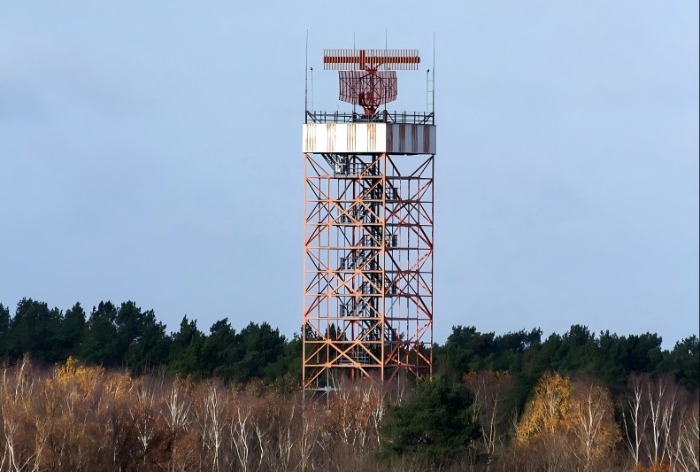
Unlike the airport traffic control tower (ATCT), which is primarily for visual observation, the radar tower is an equipment-support structure designed to meet stringent structural standards (TIA-222-H/F/G), with hot-dip galvanized steel construction ensuring 30–50 years of corrosion protection in exposed airport environments. Radar systems mounted on these towers—such as the ASR-11 Digital Airport Surveillance Radar—provide primary surveillance coverage up to 60 nautical miles and secondary surveillance coverage up to 120 nautical miles, forming the backbone of modern air traffic management.
Key Takeaways
· Radar towers are structural platforms, not control cabs: They support radar antennas, not air traffic controllers. The control tower (ATCT) provides visual observation; the radar tower houses the surveillance equipment.
· Height is critical for line-of-sight: Radar antennas must be elevated to achieve unobstructed coverage over terrain, buildings, and other obstacles. Typical radar tower heights range from 15 to 50 meters, with custom heights available.
· ASR is the workhorse of terminal radar: Airport Surveillance Radar (ASR) detects and displays aircraft position (bearing and range) within the terminal area, typically operating within 40 to 60 nautical miles (75 to 110 km) of the airport.
· Primary vs. Secondary Radar: Primary radar detects aircraft by reflected signals (no aircraft cooperation required); secondary radar interrogates aircraft transponders for additional data (identity, altitude).
· Structural standards are rigorous: Radar towers must comply with ANSI/TIA-222-H/F/G structural standards, with design considerations including wind loads (up to 350 km/h 3-second gust), ice loads, and seismic activity.
· Hot-dip galvanizing ensures longevity: ASTM A123-compliant galvanizing (85–100μm zinc coating) provides 30–50 years of maintenance-free corrosion protection in harsh airport environments.
1. What Is a Radar Tower in Air Traffic Control?
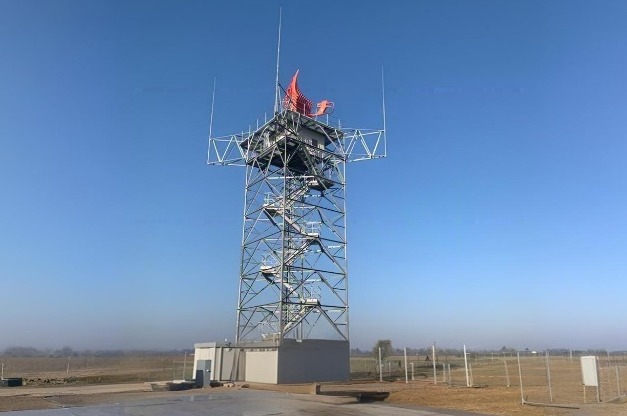
In the context of air traffic control (ATC), a radar tower is a steel support structure—not a occupied control cab—that elevates surveillance radar antennas to the height necessary for effective line-of-sight coverage. Unlike the familiar glass-walled control tower (ATCT) where controllers visually observe aircraft, the radar tower is an equipment platform that supports:
· Airport Surveillance Radar (ASR) : Detects and displays aircraft position (bearing and range) in the terminal area. ASR typically operates in the E band and can reliably detect and track aircraft at altitudes below 25,000 feet (7,620 meters) within 40 to 60 nautical miles (75 to 110 km) of the airport.
· Air Route Surveillance Radar (ARSR) : Provides longer-range coverage (beyond 250 nautical miles) for en-route air traffic control centers.
· ASDE (Airport Surface Detection Equipment) : The rotating disc on top of some towers that tracks aircraft and vehicles moving on the airport surface.
· Precision Approach Radar (PAR) : Provides vertical and horizontal guidance for aircraft during final approach.
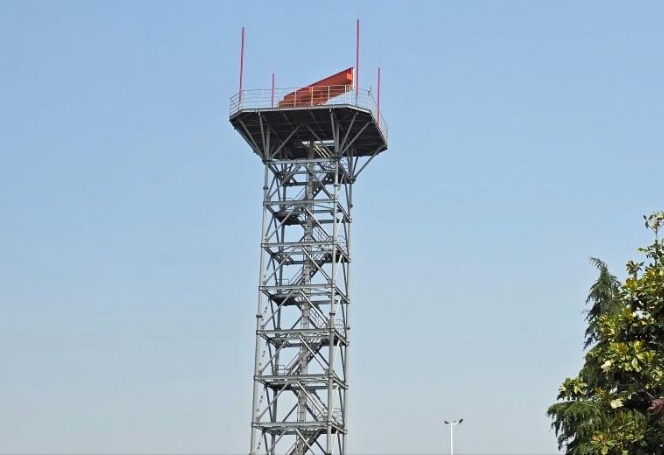
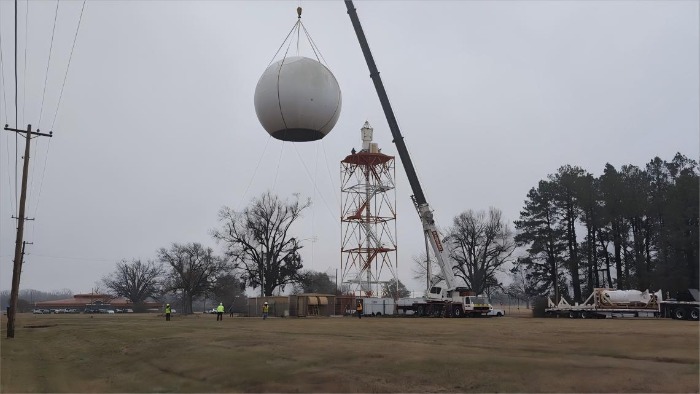
The radar tower itself is typically a lattice or monopole structure, fabricated from high-strength steel and hot-dip galvanized for corrosion resistance. It must be engineered to support the weight of the radar antenna (which can be substantial—the ASR-11 antenna system weighs several tons), withstand extreme wind loads, and maintain precise alignment to ensure radar beam accuracy.
2. Types of Air Traffic Control Radar
2.1 Airport Surveillance Radar (ASR)
ASR is the primary radar used for terminal area surveillance. It provides controllers with a two-dimensional display of aircraft position (range and azimuth). ASR does not provide elevation data—altitude information comes from secondary radar or pilot reports.
Key ASR systems include:
| System | Primary Range | Secondary Range | Frequency Band | Key Feature |
|---|---|---|---|---|
| ASR-7/ASR-8 | ~60 NM | ~60 NM | E-band | Older analog systems |
| ASR-9 | ~60 NM | ~60 NM | E-band | Widely deployed US system |
| ASR-11 (DASR) | 60 NM | 120 NM | 2.7–2.9 GHz (S-band) | Digital, next-generation |
The ASR-11 Digital Airport Surveillance Radar (DASR) is the current standard for US terminal air traffic control. It features:
Primary surveillance coverage: 60 nautical miles
Secondary surveillance coverage: 120 nautical miles (monopulse secondary surveillance radar)
Frequency: 2.7–2.9 GHz (S-band)
Beamwidth: 1.4° horizontal, 5° vertical
Transmitter power: 25 kW peak, 2.1 kW average
The ASR-11 provides improved aircraft detection, lower support costs, and better weather display compared to earlier systems.
2.2 Air Route Surveillance Radar (ARSR)
ARSR provides long-range surveillance for en-route air traffic control centers. Its detection range exceeds 250 nautical miles, covering the vast airspace between airports. ARSR is typically installed at dedicated radar sites, not directly at airports, and its support towers are often taller and more robust than ASR towers.
2.3 Airport Surface Detection Equipment (ASDE)
ASDE tracks aircraft and vehicles moving on the airport surface—runways, taxiways, and aprons. The distinctive rotating disc seen on some control towers is ASDE, providing ground controllers with real-time situational awareness of surface movements. ASDE operates at higher frequencies (typically Ku-band) for high-resolution imaging of the airport surface.
2.4 Precision Approach Radar (PAR)
PAR provides precise vertical and horizontal guidance to aircraft during the final stages of approach. It is typically deployed at military airfields and some civilian airports with instrument landing system (ILS) backup requirements.
3. Radar Tower Structural Design and Engineering
3.1 Design Standards
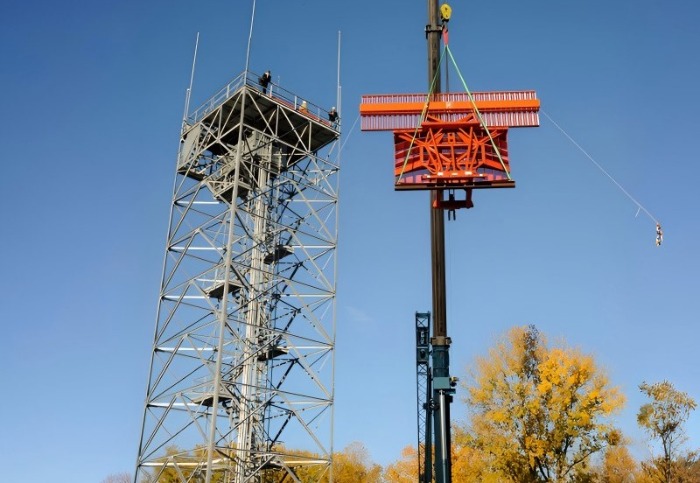
Radar towers must comply with rigorous structural standards to ensure safety, reliability, and longevity. The primary standard is ANSI/TIA-222 (currently revision H), the Structural Standard for Antenna Supporting Structures and Antennas.
Key design requirements under TIA-222 include:
| Design Parameter | Requirement |
|---|---|
| Wind load analysis | Minimum 12 wind directions (4 face winds, 4 apex winds, 6 parallel winds) |
| Ice loading | Design for specified ice thickness (e.g., 1 inch ice at 50 mph wind) |
| Exposure category | Typically Category C (open terrain) |
| Sway and displacement limits | Per TIA-222-H specifications |
| Structural class | Class II or higher |
| Foundation design | Engineered for site-specific soil conditions and load combinations |
The tower must be designed to support all specified antennas, transmission lines, and other appurtenances under minimum wind loads as specified by TIA-222-H. Design wind speeds can reach 350 km/h (3-second gust) for extreme environments.
3.2 Structural Configuration
Radar towers are typically lattice structures (four-legged or three-legged) rather than monopoles, because:
· Higher load capacity: Lattice towers can support the heavy weight of radar antenna systems
· Lower deflection: Lattice structures exhibit better performance under critical wind loads
· Open design: Allows wind to pass through, reducing overall wind load
· Modular construction: Components ship in compact bundles and assemble with bolted connections—no field welding required
However, monopoles may be used for smaller radar installations or where visual impact is a concern.
3.3 Height and Line-of-Sight Requirements
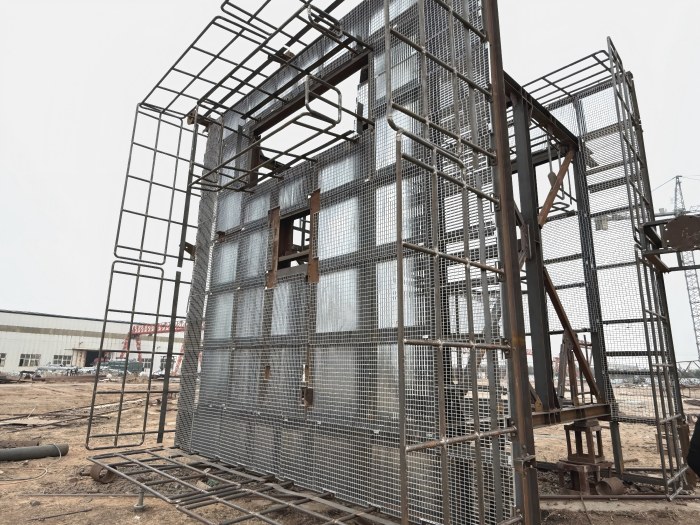
Radar tower height is determined by the need for unobstructed line-of-sight between the radar antenna and aircraft in the coverage area. FAA siting criteria specify that:
· Within 2,500 feet of the radar, no structure should block the radar beam
· Beyond 2,500 feet, structures should not block the beam by more than 0.25 degrees in elevation or azimuth
· The effective height of the antenna phase center is typically 25 feet above the antenna base, with 10-foot increments available to provide line-of-sight visibility over surrounding terrain
Typical radar tower heights range from 15 to 50 meters, with custom heights available for specific site requirements.
3.4 Materials and Corrosion Protection
Radar towers are typically fabricated from high-strength steel (Q345B/A572 Gr50 or equivalent) and protected by hot-dip galvanizing per ASTM A123 with a zinc coating thickness of 85–100μm. This provides:
· 30–50 years of maintenance-free corrosion protection
· Cathodic protection: Zinc sacrificially protects steel even if scratched
·Complete coverage: Internal and external surfaces protected
· Weather resistance: Withstands salt spray, moisture, and temperature extremes
4. Radar Tower vs. Control Tower: Understanding the Difference
A common point of confusion is the distinction between the radar tower (equipment support structure) and the air traffic control tower (ATCT) (occupied control cab). The table below clarifies the differences:
| Feature | Radar Tower | Air Traffic Control Tower (ATCT) |
|---|---|---|
| Primary function | Support radar antennas | Provide visual observation for controllers |
| Occupied | No—equipment only | Yes—air traffic controllers on duty |
| Height | 15–50+ meters | Varies by airport (typically 20–100+ meters) |
| Structure | Lattice or monopole | Reinforced concrete or steel frame with glass cab |
| Radar systems | ASR, ARSR, ASDE, PAR | May have limited radar displays (BRITE) |
| Primary surveillance | Radar provides 2D position (range + azimuth) | Visual observation of aircraft on runways and surface |
| Coverage | 60–120+ NM | Line-of-sight visual range |
The radar tower and control tower are complementary but distinct infrastructure elements. The radar tower provides the surveillance data; the control tower provides the human interface for directing aircraft.
5. Radar Tower Site Selection and Obstacle Clearance
Siting a radar tower is a complex process governed by FAA Order 6310.6 (Primary/Secondary Terminal Radar Siting Handbook). Key considerations include:
5.1 Line-of-Sight Coverage
The radar antenna must have an unobstructed view of the airspace it is intended to cover. Terrain, buildings, and other structures can block or reflect radar signals, creating blind spots or clutter.
5.2 Clutter Analysis
The maximum range of the clutter zone along a given azimuth radial is determined by the range to the radar horizon, or to a screening object, whichever is smaller. Site surveys must identify ground areas of maximum clutter within view of the radar.
5.3 Obstacle Clearance
Specific obstacle clearance criteria apply:
· Within 2,500 feet: No structure should block the radar beam
· Beyond 2,500 feet: Structures should not block the beam by more than 0.25 degrees
· For TDWR (Terminal Doppler Weather Radar): Similar criteria apply
5.4 Environmental and Zoning Considerations
Radar towers must comply with local zoning regulations, environmental impact assessments, and aviation obstruction lighting requirements (FAA Advisory Circular AC 70/7460-1L for obstruction marking and lighting).
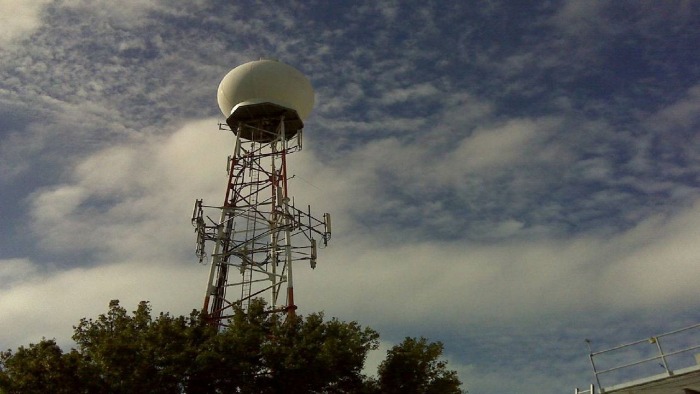
6. Case Study: Qingdao Altai Tower Radar Support Solutions
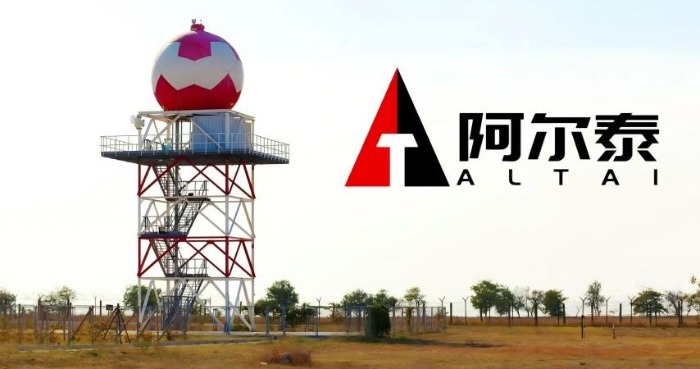
Qingdao Altai Tower Co., Ltd. is a professional manufacturer of telecommunication towers, power towers, and tower accessories, established in 2003. The company specializes in the design, manufacturing, and installation of steel towers and communication structures, with products exported to more than 100 countries and regions.
Radar Tower Product Line
| Model | Type | Height Range | Key Applications |
|---|---|---|---|
| Weather Radar Lattice Tower | Lattice | 15–50m+ | Weather monitoring, precipitation tracking |
| Airport Weather Radar Mount | Lattice | Custom | Air traffic control, aviation safety |
| Radar Support Lattice Tower | Lattice | Custom | Military, ATC, meteorological operations |
Manufacturing Capabilities
Production capacity: 2,000–3,000 metric tons per month
Equipment: 4000-ton hydraulic CNC bending machine for high-strength, high-precision components
Galvanizing: In-house workshop with Italian equipment, strictly following ASTM A123
Lead time: 30 days after payment
Certifications: ISO9001, ISO14001, ISO45001
Quality Standards
Qingdao Altai Tower radar support structures comply with:
ANSI/TIA-222-H/F/G: Structural standards for antenna supporting structures
ASTM A123: Hot-dip galvanizing specifications
AWS D1.1: Welding standards
ISO 1461: Galvanizing standards
Design wind speed: 100–350 km/h (3-second gust)
Why Choose Altai Tower for Radar Support Structures?
- In-house galvanizing workshop with Italian equipment, ensuring consistent coating quality
- Comprehensive certifications: ISO9001, ISO14001, ISO45001
- 23 international patents demonstrating engineering innovation
- Modular design enabling efficient packaging and rapid deployment
- Bolted connections—no field welding required, simplifying installation
7. Radar Tower Comparison: Lattice vs. Monopole for ATC Applications
| Parameter | Lattice Tower | Monopole |
|---|---|---|
| Load capacity | High—supports heavy radar antennas | Moderate |
| Height capability | 50m+ | Typically 40m max |
| Wind performance | Superior—open design reduces wind load | Higher wind load on solid structure |
| Deflection under wind | Lower | Higher |
| Structural redundancy | High—multiple load paths | Low—single point of failure |
| Transportation | Compact bundles—no special permits | Oversized loads may require permits |
| Installation | Bolted connections—no field welding | Faster but requires heavier lifting equipment |
| Foundation | Distributed load—smaller footings | Concentrated load—larger foundation |
| Best for | Heavy radar arrays, tall towers, high-wind sites | Smaller radars, space-constrained sites |
8. The Role of Radar Towers in the Future of ATC
The role of radar towers in air traffic control is evolving with technology, but the need for elevated, structurally sound radar platforms remains constant.
8.1 Digital Radar and ASR-11
The transition to digital radar systems like the ASR-11 DASR represents a significant advancement. These systems offer:
Improved aircraft detection
Lower support costs
Better weather display
Unattended operation capabilities with redundant subsystems
Remote control from multiple locations
8.2 Remote and Digital Towers
Remote tower technology uses cameras and sensors placed around the airfield to provide controllers with a virtual picture of reality, enhanced by artificial information. While this reduces the need for tall ATCTs, radar towers remain essential as the physical platforms for the surveillance sensors.
8.3 Integration with Satellite Navigation
Modern ATC increasingly integrates radar data with satellite-based navigation (GPS, GNSS) and ADS-B (Automatic Dependent Surveillance–Broadcast). Radar towers continue to provide the primary surveillance backup and terrain/obstacle detection capabilities that satellite systems alone cannot match.
FAQ
Q1: What is the difference between a radar tower and a control tower?
- A: A radar tower is an unoccupied steel structure that supports radar antennas for surveillance. A control tower (ATCT) is an occupied facility where air traffic controllers visually observe aircraft and direct traffic. The radar tower provides surveillance data; the control tower provides human control.
Q2: How high does a radar tower need to be?
- A: Radar tower height depends on site terrain and coverage requirements. Typical heights range from 15 to 50 meters. The antenna must be elevated to achieve unobstructed line-of-sight over terrain and obstacles.
Q3: What is the range of an airport surveillance radar?
- A: The ASR-11 Digital Airport Surveillance Radar provides primary surveillance coverage to 60 nautical miles and secondary surveillance coverage to 120 nautical miles. Earlier ASR systems typically provide coverage within 40 to 60 nautical miles.
Q4: What structural standards apply to radar towers?
A: Radar towers must comply with ANSI/TIA-222-H/F/G Structural Standards for Antenna Supporting Structures, with design considerations for wind loads, ice loads, seismic activity, and foundation requirements.
Q5: What materials are used for radar tower construction?
- A: Radar towers are typically fabricated from high-strength steel (Q345B/A572 Gr50 or equivalent) and protected by hot-dip galvanizing per ASTM A123 with 85–100μm zinc coating, providing 30–50 years of corrosion protection.
Q6: What types of radar are mounted on radar towers?
- A: Radar towers support Airport Surveillance Radar (ASR) for terminal area surveillance, Air Route Surveillance Radar (ARSR) for en-route coverage, ASDE (Airport Surface Detection Equipment) for ground movement tracking, and Precision Approach Radar (PAR) for landing guidance.
Q7: Why are lattice towers preferred over monopoles for radar applications?
- A: Lattice towers offer higher load capacity, lower deflection under wind loads, superior wind performance (open design allows wind to pass through), and easier transportation (components ship in compact bundles with no special permits required).
Q8: How long does a galvanized radar tower last?
- A: Hot-dip galvanized per ASTM A123, a radar tower provides 30–50 years of maintenance-free corrosion protection in most environments, including coastal and industrial areas.
Q9: Can radar towers be customized for specific site conditions?
- A: Yes. Radar towers are fully customizable for height (15–50m+), load capacity, platform configuration, wind speed rating (up to 350 km/h 3-second gust), and corrosion protection requirements.
Q10: What is the ASR-11 DASR?
- A: The ASR-11 Digital Airport Surveillance Radar (DASR) is the next-generation terminal radar system used by the US FAA. It provides primary surveillance to 60 NM and secondary surveillance to 120 NM, with improved detection, lower support costs, and better weather display.
Conclusion
Radar towers are the unsung structural backbone of modern air traffic control. While the control tower with its panoramic windows captures the public imagination, it is the radar tower—the steel lattice rising beside the runway—that provides the surveillance data controllers rely on to keep aircraft safely separated.
From the ASR-11's 60-nautical-mile primary coverage to the 120-nautical-mile secondary range, from the S-band frequencies that penetrate weather to the hot-dip galvanized steel that withstands decades of coastal exposure, every element of the radar tower is engineered for one purpose: providing controllers with accurate, reliable, and timely information about every aircraft in their airspace.
As aviation technology evolves—with digital radars, remote towers, and satellite-based surveillance—the radar tower remains indispensable. It is the platform that elevates the antenna, the structure that withstands the wind, and the foundation that ensures the radar beam points true. In securing the skies, the radar tower is not merely a support structure—it is the silent sentinel of aviation safety.
Ready to deploy a radar support tower for your ATC or surveillance project? Contact Qingdao Altai Tower's engineering team today for custom design, site-specific engineering, and a detailed proposal.


评论
发表评论