Customization in Production: Tailoring Watchtower Height, Platform Layout, and Load Capacity
Quick Answer
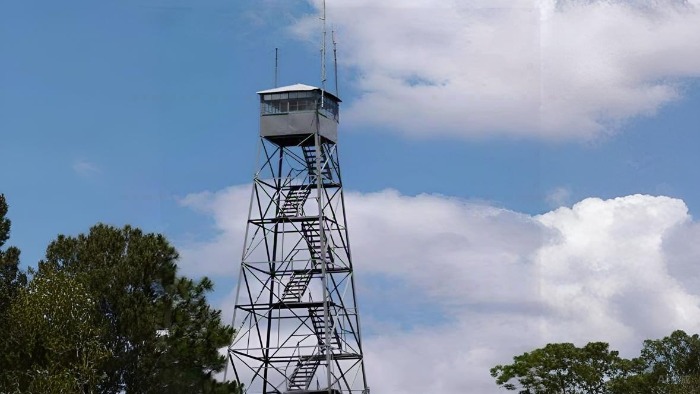
Modern observation guard towers are fully customizable steel structures engineered to meet the specific demands of any security, surveillance, or monitoring application. Height can be tailored from 6 meters to over 50 meters, platform layouts can accommodate 1 to 3+ levels with custom dimensions and access methods (ladders or staircases), and load capacity can be engineered to support 300 kg to over 3,000 kg of equipment and personnel. Hot-dip galvanized per ASTM A123 with 85–100μm zinc coating, these towers deliver 30 to 50 years of maintenance-free service life in harsh environments—from coastal ports to industrial facilities and remote border outposts.
Key Takeaways
Height is fully customizable: Towers can be engineered from 6m to 50m+, with modular designs enabling on-site height adjustments
Platform layouts are application-driven: Single-level observation decks for basic surveillance, multi-tier platforms for layered monitoring, and custom cabin enclosures for personnel protection
Load capacity scales with mission requirements: From 300kg for lightweight camera systems to 3,000kg+ for integrated surveillance suites with personnel
Hot-dip galvanizing ensures longevity: ASTM A123-compliant coating (85–100μm) provides 30–50 year corrosion protection
Modular design enables rapid deployment: Prefabricated components ship in compact bundles and assemble on-site with bolted connections
Design standards ensure structural integrity: Towers comply with TIA-222-H/F/G, AWS D1.1 welding standards, and ISO 898-1/-2 bolt specifications
1. Understanding the Customization Landscape
No two security or surveillance applications are identical. A border patrol installation requires different specifications than a prison perimeter tower, a port security platform, or a wildfire observation post. This is why customization is not an add-on—it is the starting point for any observation tower project.
Manufacturers offering OEM (Original Equipment Manufacturer) services work directly with clients to engineer towers that match their specific operational requirements, site conditions, and budget constraints. The three primary customizable dimensions are height, platform layout, and load capacity—each interdependent and each requiring careful engineering analysis.
2. Height Customization: Reaching the Right Vantage Point
The Range
Observation towers can be engineered across a wide spectrum of heights:
6–12 meters: Small industrial sites, event security, construction monitoring
15–25 meters: Medium-size facilities, prison perimeters, substations
25–50 meters: Large ports, military installations, wide-area surveillance
50+ meters: Specialized broadcast or long-range monitoring applications
The Engineering Consideration
Height is not simply a matter of extending the tower upward. As height increases, wind load, structural deflection, and foundation requirements all scale non-linearly. A well-engineered customization process accounts for:
Site-specific wind speeds: Designs accommodate operational wind loads and survival wind speeds
Deflection limits: Towers maintain 0.5–1.0 degree deflection at operational wind speeds to ensure platform stability
Foundation design: Height directly influences foundation depth and reinforcement requirements
Modular Advantages
Modular designs allow height adjustments without fundamental changes to the design philosophy. Components ship in sections and are assembled on-site, enabling:
Custom heights with standard components
Future height modifications as needs evolve
Efficient packaging and reduced shipping costs
3. Platform Layout: Designing the Observation Deck
Platform Count and Configuration
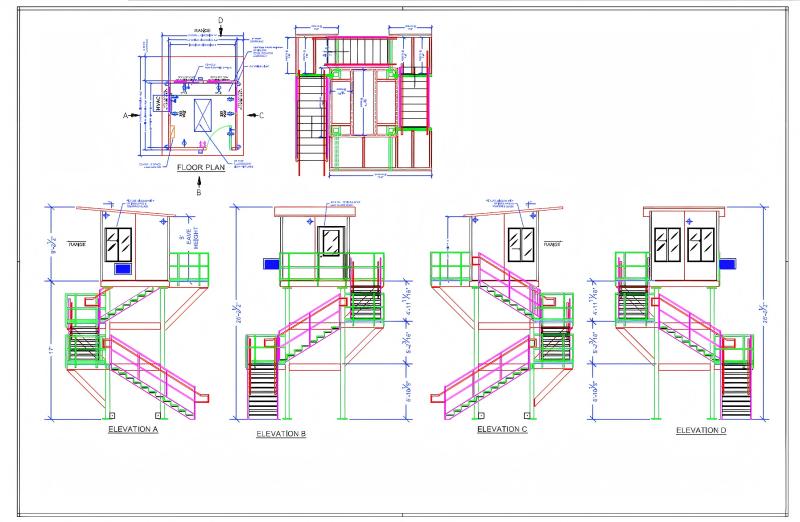
Observation towers can be configured with:
Single platform: Basic observation or camera mounting
Multi-tier platforms: Layered monitoring with separate levels for equipment, personnel, and command functions
Enclosed cabins: Weather-protected observation rooms with heating, cooling, and ballistic protection
Custom access: Ladders for rapid climbing or staircases for frequent personnel movement
Platform Dimensions
Platform size must accommodate both equipment and personnel:
Standard footprints: Starting at 4' × 4' (approximately 1.2m × 1.2m) up to 18' × 18' (5.5m × 5.5m)
Custom sizing: Available for larger equipment arrays or multiple personnel
Load-rated grating: Platforms typically use grating mesh with load capacities up to 40kN/m²
Application-Specific Configurations
| Platform Configuration | Best For | Key Features |
|---|---|---|
| Single open deck | Camera surveillance, wildlife monitoring | Lightweight, low wind load, rapid deployment |
| Multi-tier with stairs | Prison perimeters, military installations | Personnel access, equipment separation, layered observation |
| Enclosed cabin | Extreme weather environments, border patrol | Climate control, ballistic protection, 360° visibility |
| Modular expandable | Construction sites, temporary events | Rapid assembly, relocatable, adaptable |
4. Load Capacity: Matching Structure to Mission
What "Load Capacity" Means
Load capacity encompasses everything the tower must support:
Personnel weight: 6–10 persons typically
Equipment weight: Cameras, radar, communication antennas, lighting
Environmental loads: Wind, ice, snow accumulation
Dynamic loads: Movement of personnel, vibration from equipment
Typical Capacity Ranges
| Application | Typical Load Capacity | Equipment Examples |
|---|---|---|
| Basic surveillance | 300–500 kg | PTZ cameras, small antennas |
| Security monitoring | 500–1,500 kg | Multiple cameras, radar, communication gear |
| Heavy-duty observation | 1,500–3,000 kg | Personnel (6–10), full surveillance suite, weapons systems |
| Critical infrastructure | 3,000 kg+ | Integrated command systems, heavy radar, ballistic protection |
Structural Reinforcement
For extreme weather conditions or heavy equipment loads, towers can be reinforced with:
Additional bracing: Enhanced wind and seismic resistance
Thicker steel sections: Higher load-bearing capacity
Enhanced foundations: Deeper footings or expanded base dimensions
5. Materials and Protection: The Foundation of Durability
Steel Grades
Observation towers are typically fabricated from:
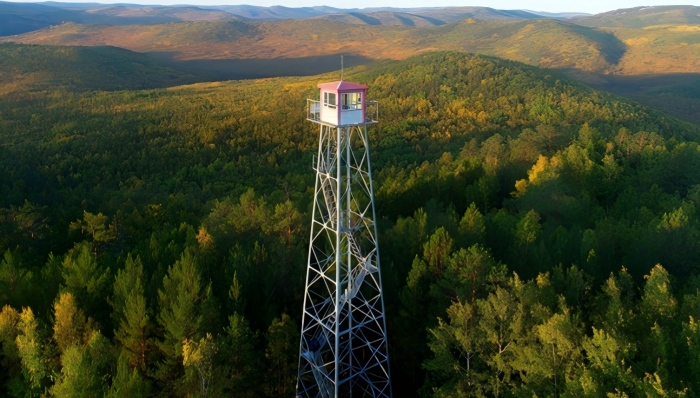
Q235B/A36: Standard structural steel, yield strength ≥235MPa
Q345B/A572 Gr50: High-strength low-alloy steel for demanding applications
S355JR/S355J0/S355J2: European equivalents with varying impact resistance at different temperatures
Hot-Dip Galvanizing (ASTM A123)
The corrosion protection system is critical for towers exposed to weather, salt spray, and industrial pollutants. ASTM A123 hot-dip galvanizing provides:
85–100μm zinc coating
30–50 year service life with no maintenance
Cathodic protection: Zinc sacrificially protects steel even if scratched
Complete coverage: Internal and external surfaces protected
Fastener Standards
Bolts, nuts, and washers comply with international standards:
Bolts: ISO 898-1, Grade 4.8, 6.8, or 8.8
Nuts: ISO 898-2
Washers: ISO 6507-1
6. Design Standards and Quality Assurance
Structural Design Standards
Observation towers are engineered to meet rigorous industry standards:
TIA-222-H/F/G: Structural standard for antenna supporting structures
AWS D1.1: Welding standard
ISO 1461 or ASTM A123: Galvanizing standard
ISO 9001:2008: Quality management certification
Quality Control Testing
Manufacturers perform comprehensive testing to verify quality:
Tensile testing: Verifies material strength
Element analysis: Confirms chemical composition
Impact testing (Charpy): Verifies toughness at temperature
Cold bending: Confirms ductility
Preece test: Verifies galvanizing uniformity
Hammer test: Verifies coating adhesion
7. Customization in Practice: Qingdao Altai Tower Solutions
Qingdao Altai Tower Co., Ltd. is a professional manufacturer of telecommunication towers, power towers, and tower accessories. The company holds ISO9001, ISO14001, and ISO45001 certifications and has been granted 23 international patents. With products exported to more than 100 countries and regions—including the United States, Middle Eastern countries, and Europe—the company has established a strong reputation for quality and customization capability.
Product Line Overview
| Model | Height | Platform | Application |
|---|---|---|---|
| AT-G06 | 15–25m | Single/Multi-tier | General observation, security monitoring |
| AT-G15 | 15m | Multi-functional | Industrial sites, construction, public events |
| AT-G20 | 20m | Observation deck | Parks, nature reserves, surveillance |
| AT-G25 | 25m | Panoramic | Industrial sites, military, public events |
| AT-G30 | 30m | Multi-function | Security monitoring, emergency response |
Manufacturing Capabilities
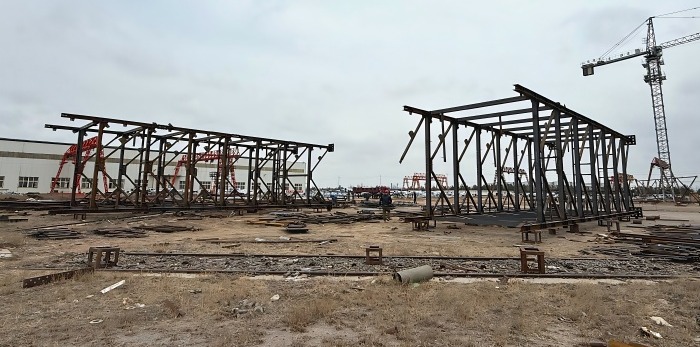
Production capacity: 2,000–3,000 metric tons per month
Lead time: 30 days after payment
Packaging: Sea-worthy packaging with galvanized strapping
Color: Customizable per client requirements
Shipping: From Qingdao port or designated ports
Why Choose Altai Tower?
In-house galvanizing workshop with Italian equipment, strictly following ASTM A123
ISO, CE, and other international certifications
23 international patents demonstrating innovation
Modular design enabling efficient packaging and rapid deployment
Customization at every level: height, platform, load, color, finish
8. Application Decision Matrix
| Application | Recommended Height | Platform Configuration | Load Capacity | Key Considerations |
|---|---|---|---|---|
| Industrial site security | 15–20m | Single open deck | 500–1,000 kg | Wind resistance, corrosion protection |
| Prison perimeter | 18–25m | Multi-tier with cabin | 1,500–3,000 kg | Ballistic protection, 360° visibility |
| Border patrol | 25–50m | Enclosed cabin | 1,500–3,000 kg | Extreme weather resistance, communications integration |
| Port security | 20–30m | Multi-tier | 1,000–2,000 kg | Salt spray resistance, maritime radar integration |
| Wildfire observation | 15–25m | Single open deck | 300–500 kg | Rapid deployment, solar power compatibility |
| Event security | 10–15m | Modular mobile | 500–1,000 kg | Relocatable, rapid assembly |
| Construction monitoring | 10–20m | Single platform | 300–500 kg | Portable, temporary installation |
| Military installation | 25–50m | Enclosed with ballistic protection | 3,000 kg+ | Ballistic and blast resistance |
FAQ
Q1: What is the typical lead time for a custom observation tower?
- A: Custom observation towers typically ship within 30 days after payment. Manufacturing capacity ranges from 2,000 to 3,000 metric tons per month, ensuring efficient production even for large orders.
Q2: What is the maximum height available for a custom observation tower?
- A: Heights can be customized from 6 meters to over 50 meters. For specialized applications, towers exceeding 100 meters are possible, though these require significantly more engineering and foundation work.
Q3: What load capacity can a custom observation tower support?
- A: Load capacity ranges from 300 kg for lightweight camera systems to 3,000 kg+ for heavy-duty surveillance suites with personnel. The specific capacity depends on height, platform configuration, and site wind conditions.
Q4: What corrosion protection is provided?
- A: Towers are hot-dip galvanized per ASTM A123 with a zinc coating thickness of 85–100μm. This provides 30 to 50 years of maintenance-free corrosion protection in most environments.
Q5: Can the tower be disassembled and relocated?
- A: Yes. Modular designs with bolted connections allow for easy dismantling and relocation. This is particularly valuable for temporary installations, construction sites, and event security applications.
Q6: What design standards do custom towers comply with?
- A: Towers are engineered to comply with TIA-222-H/F/G structural standards, AWS D1.1 welding standards, and ISO 1461 or ASTM A123 galvanizing standards.
Q7: Can I customize the platform configuration?
- A: Yes. Platform options include single decks, multi-tier configurations, enclosed cabins, and custom access methods (ladders or staircases). Platform size can be customized from 4' × 4' to 18' × 18' or larger.
Q8: What steel grades are available?
- A: Common grades include Q235B/A36 (standard structural steel), Q345B/A572 Gr50 (high-strength low-alloy), and S355JR/S355J0/S355J2 (European equivalents with varying impact resistance).
Q9: Can the tower be painted in custom colors?
- A: Yes. Surface treatment options include hot-dip galvanizing or painting, with color customizable per client requirements.
Q10: What quality testing is performed?
- A: Manufacturers perform tensile testing, elemental analysis, impact testing (Charpy), cold bending tests, Preece tests (galvanizing uniformity), and hammer tests (coating adhesion) to verify quality.
Conclusion
Observation guard towers are not off-the-shelf products—they are engineered solutions tailored to the specific demands of each security, surveillance, or monitoring application. From height that ranges from 6 to 50+ meters, to platform layouts that accommodate single observers or multi-tier command centers, to load capacities that scale from lightweight camera systems to heavy-duty integrated surveillance suites, modern manufacturing delivers what each mission requires.
Hot-dip galvanizing per ASTM A123 ensures that these custom-engineered structures will stand for decades—30 to 50 years—without maintenance, even in the harshest coastal, industrial, or remote environments. With ISO-certified manufacturing, 23 international patents, and a track record of exports to more than 100 countries, manufacturers like Qingdao Altai Tower demonstrate that customization is not just possible—it is the new standard.
Whether you are securing a power plant, monitoring a port, patrolling a border, or protecting a prison perimeter, the right tower is the one designed for your specific requirements. And with modern modular, galvanized steel construction, that tower can be engineered, fabricated, and delivered faster than ever before.
Ready to customize your observation tower for your specific security application? Contact Qingdao Altai Tower's engineering team today for a site assessment, custom design, and detailed proposal.
Contact Us


评论
发表评论