How Angle Steel Towers Enable Low-Cost Coverage in Agricultural Regions
In the global push to bridge the digital divide, agricultural regions present a unique infrastructure challenge. Vast, open fields, low population density, and widely dispersed farmsteads demand tall towers for adequate coverage—yet the revenue potential per square kilometer is a fraction of what urban networks generate. The telecom industry's solution to this economic paradox is the angle steel tower.
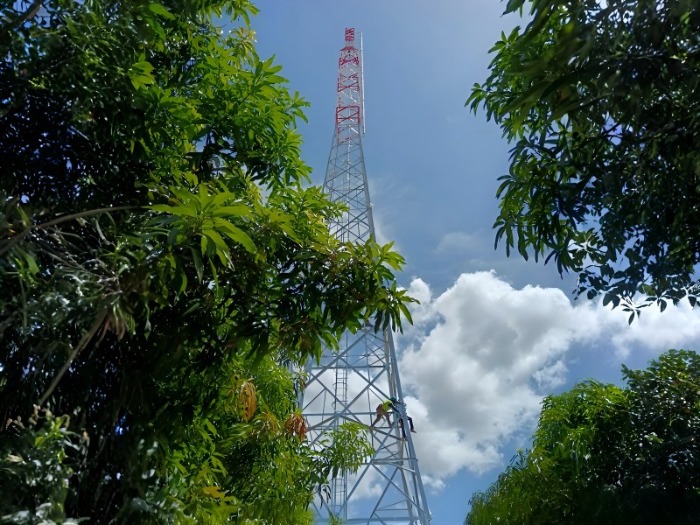
For network operators, agricultural cooperatives, and rural broadband initiatives seeking to maximize coverage while minimizing capital expenditure, the angle steel tower offers an unmatched combination of material efficiency, logistical practicality, and long-term durability.
Rural Coverage Economics: Why Open Fields Favor Angle Steel
Agricultural regions impose a distinct set of requirements on telecom infrastructure. A single tower in a farming area must cover far greater distances than its urban counterpart, requiring heights typically ranging from 40 to 60 meters to clear terrain and deliver line-of-sight propagation across open landscapes. The tower must support multiple antennas for 4G and 5G services, along with microwave backhaul equipment for connecting remote sites to core networks. Yet budget constraints are severe. In many agricultural broadband projects, rural cellular solutions can reduce total site construction costs to just 20–40% of traditional macro base stations.
Angle steel towers directly address this cost imperative through their fundamental design. Constructed from hot-rolled steel angle sections (L-shaped profiles) bolted into a lattice framework, they achieve an exceptional strength-to-weight ratio that minimizes material usage while maintaining structural integrity. The open lattice configuration of angle steel towers allows wind to pass through, significantly reducing lateral forces and making them less prone to vibration in high winds—a critical advantage in exposed agricultural landscapes. This design efficiency translates directly into cost savings that compound across the entire project lifecycle.
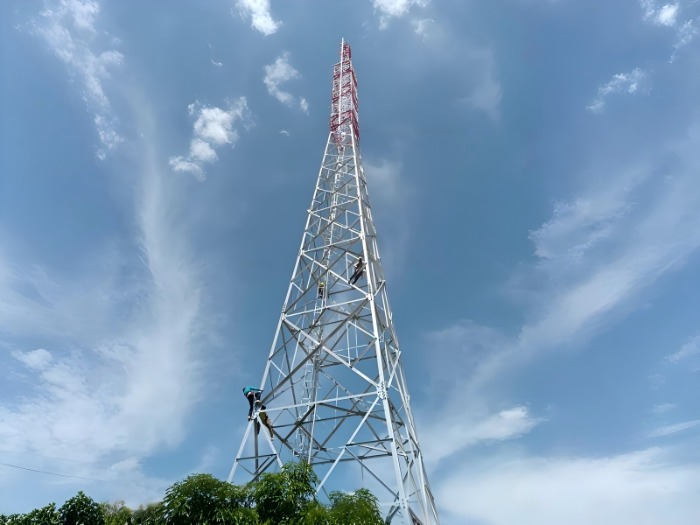
Material and Fabrication Efficiency: The Direct Cost Advantage
The economic case for angle steel towers begins with raw materials. The lattice design consumes considerably less steel than solid-walled monopoles of equivalent height and load capacity—typically 20–30% less, with some lattice configurations achieving savings of 30–40%. This is not a minor margin; for a 50-meter tower serving a farming community, the reduction in tonnage can mean thousands of dollars saved in material procurement alone.
Angle steel’s fabrication simplicity compounds the advantage. Angle steel sections are among the most economical structural shapes available, combining relatively low unit costs with straightforward processing requirements. The manufacturing cycle—cutting, drilling, hot-dip galvanizing—is well-established and highly efficient. Because the lattice structure relies primarily on bolted connections rather than complex welding, fabrication complexity remains low, and shop throughput remains high.
For agricultural projects procured in volume—rural network expansions often involve dozens of towers across a region—cost advantages become even more pronounced. Volume orders above 50, 100, and 250 units typically unlock discounts of 5%, 10%, and 15% respectively, further compressing per-unit costs when agricultural broadband initiatives deploy at regional scale.
Logistics and Transportation: Mastering the Rural Supply Chain
In agricultural regions, the journey from factory to field is often the hidden driver of project costs. Rural tower deployments demand transport over unpaved roads, narrow farm tracks, and sometimes across open fields with limited access—precisely the environments where traditional welded monopole sections become logistics nightmares. A single welded tower section may exceed standard shipping dimensions, requiring specialized flatbed trailers, police escorts, and route planning that adds weeks to delivery schedules.
Angle steel towers solve this problem through modularity. The fundamental insight is deceptively simple: design the tower around the shipping container, not the other way around. Unlike welded tubular or monopole designs, which occupy fixed, bulky shapes, angle steel members nest together with exceptional density. An average 20-foot shipping container can hold 40,000 pounds of cargo; with angle construction, the full weight capacity can be maximized in a way that is simply not possible with welded construction.
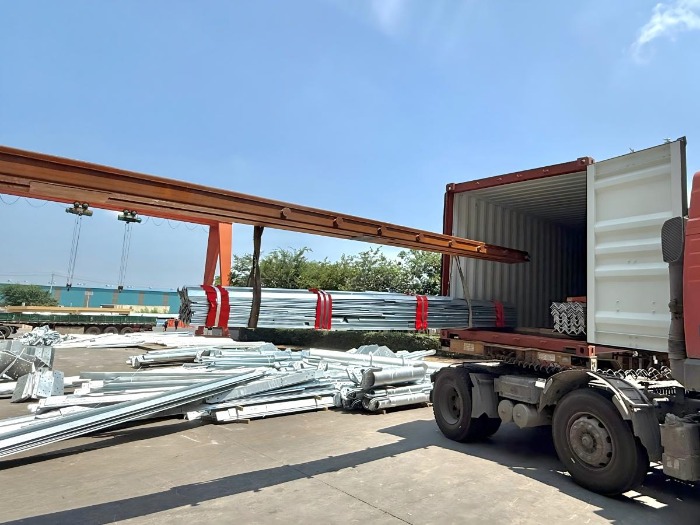
The real-world impact is stark: A typical 60-meter lattice tower fabricated with welded construction might require 10–12 truckloads or break-bulk shipments. A modular angle tower of equivalent capacity can often be packed into 3–4 standard 40-foot containers—representing freight savings of 60–70%.
This modularity extends beyond packaging to on-site handling. Angle steel components are significantly lighter than their welded equivalents, facilitating transportation to remote agricultural sites where heavy equipment access may be limited. The modular design with pre-punched holes enables field assembly using high-strength bolted connections (M20–M30 ASTM A325 bolts), eliminating the need for on-site welding and the skilled labor, heavy equipment, and weather-dependent schedules it demands.
The assembly efficiency is measurable. Angle steel towers can be installed 30% faster than tubular lattice alternatives due to their pre-punched connection systems and straightforward bolting patterns. For agricultural deployments where construction windows may be limited by planting and harvesting seasons, this acceleration has direct operational value.
Foundation Simplicity: Adapting to Agricultural Terrain
One of the most significant—and frequently overlooked—cost advantages of angle steel towers in agricultural settings lies beneath the surface. The triangular geometry of three-legged angle towers concentrates structural loads at three points rather than a single monolithic base. This distributed loading regime translates directly into simpler, smaller, and more cost-effective foundations.
The practical implication for farm deployments is substantial. When siting a tower in a field or pasture, the foundation does not require the massive, heavily reinforced concrete base demanded by a monopole of equivalent height. Instead, three isolated concrete footings—typically sized around 2.5m × 2.5m × 3m deep for a 50-meter tower—can be placed with minimal excavation and material volume.
The triangular base also offers remarkable terrain adaptability. The three-leg configuration tolerates elevation differences of up to 1.5 meters between footings, allowing the tower to be sited on gently sloping farmland without requiring costly grading or earth-moving. For agricultural regions where fields may be irregular or drainage considerations dictate tower placement, this flexibility avoids significant civil works expenses.

Long-Term Durability and Maintenance in Agricultural Environments
Agricultural deployments expose towers to a distinct set of environmental stressors: airborne dust from tilling operations, chemical drift from fertilizers and pesticides, humidity variations across growing seasons, and—in many farming regions—salt spray in coastal growing areas. Angle steel towers are designed to withstand these challenges with minimal intervention.
All steel components undergo full hot-dip galvanization in compliance with ASTM A123 and ISO 1461 standards, with a minimum zinc layer thickness of 100 μm. This metallurgically bonded coating provides exceptional resistance to corrosion from moisture, chemical exposure, and atmospheric pollutants, delivering a 30+ year service life. For towers in especially aggressive environments—such as coastal agricultural zones in regions like the US Pacific Northwest or Southeast Asian rice-growing deltas—enhanced duplex systems combining HDG with epoxy or polyurethane topcoats can be specified to provide an additional layer of protection.
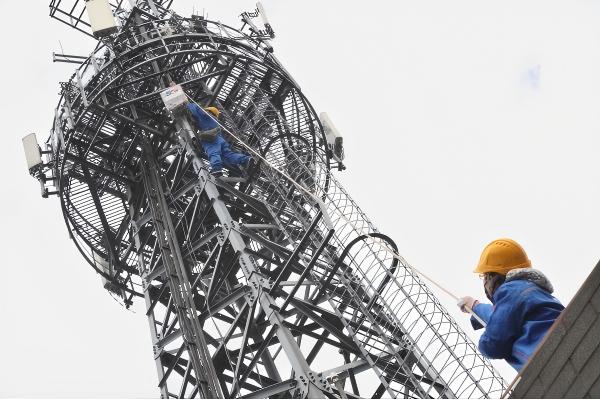
Maintenance requirements for angle steel towers are notably low. The lattice construction permits straightforward visual inspection of all members and connections from ground level or via integrated climbing systems. Unlike monopoles, where damage or corrosion to the single shaft can compromise the entire structure, angle steel towers offer redundancy: individual members can be inspected, replaced, or reinforced without affecting the overall integrity of the tower. This modular repairability is particularly valuable in remote agricultural locations where sending specialized repair crews for major structural work is logistically challenging and expensive.
Comparative Cost Analysis: Angle Steel vs. Alternative Tower Types
The economic case for angle steel towers in agricultural applications is best understood through direct comparison with alternatives.
| Cost Factor | Angle Steel Tower | Monopole (Equivalent Height) | Impact for Agriculture |
|---|---|---|---|
| Material Cost | 20–30% lower (lattice efficiency) | Higher (thick rolled plates, complex fabrication) | Significant upfront CAPEX saving |
| Transportation | 60–70% fewer loads (modular packaging) | Oversized shipments, potential special permits | Critical for remote farm access |
| Foundation | Smaller, simpler footings (distributed load) | Larger, deeper, heavily reinforced single base | Lower civil works cost |
| Installation Time | 30% faster (pre-punched bolted connections) | Faster assembly but higher equipment cost | Reduced weather risk, faster ROI |
| Maintenance | Low (redundant members, replaceable components) | Moderate but single-point vulnerability | Lower OPEX over tower lifetime |
| Land Use | Larger footprint (open lattice, base spread) | Minimal (1–2 m²) | Acceptable in low-value agricultural land |
The trade-offs are clear. Monopoles offer advantages in land-constrained or aesthetically sensitive sites—qualities of limited relevance in open farmland where land value is measured in agricultural productivity rather than development potential. For agricultural applications, the land footprint of an angle steel tower is rarely a constraint, while the material, logistics, and foundation savings directly support the project’s financial viability.
Application in Smart Agriculture and Rural Broadband
The role of angle steel towers in agricultural regions is evolving beyond basic voice and data coverage. Modern precision agriculture depends on real-time connectivity for soil sensors, yield monitors, autonomous irrigation systems, and drone-based crop imaging. These applications demand reliable network infrastructure distributed across large cultivated areas.
Angle steel towers are ideally positioned to support this transformation. Their open lattice structure provides ample mounting capacity for multiple antenna arrays, IoT gateways, and edge computing equipment. The modular design of angle steel towers can be customized to accommodate the specific payload requirements of smart farming applications, including sector antennas for wide-area cellular coverage, microwave dishes for point-to-point backhaul connecting remote field sensors, and small-cell enclosures for localized capacity in barns and equipment yards.
In China, the national “Connect Every Village” initiative has already demonstrated the effectiveness of lattice tower deployments in agricultural zones. Rural telecom projects in regions with low land values and lower user density have successfully deployed angle steel towers to provide connectivity for farm operations, e-commerce for agricultural products, and telemedicine for isolated farming communities.
Conclusion
Angle steel towers are not merely an alternative infrastructure solution for agricultural regions—they are the most economically rational choice. Their material efficiency delivers 20–30% steel savings from the start of the project. Their modular packaging slashes transportation costs by 60–70%, turning the logistical challenge of rural deployment into a manageable expense. Their distributed three-leg foundation design minimizes civil works in open fields. Their hot-dip galvanized construction ensures decades of reliable service in the demanding environmental conditions of working farmland. And their open lattice structure provides the load capacity and mounting flexibility that precision agriculture and rural broadband initiatives demand.
For network operators, agricultural cooperatives, and rural development agencies planning the next generation of farm connectivity, the choice is clear. In the vast, open landscapes where coverage is most needed and budgets are tightest, the tower that delivers the lowest total cost of ownership is the one built from angle steel.
Learn more at www.alttower.com


评论
发表评论